
Taping (Kinesio taping, Athletic taping)
Support, Stability, and Movement Confidence While You Recover
Whether you’ve rolled an ankle on the weekend, you’re managing a nagging shoulder issue, or you’re an athlete trying to get through the rest of the season, taping can be a simple but useful tool as part of your recovery. At Divine Care Physiotherapy in Langley, our physiotherapists use kinesio taping and rigid athletic taping as one part of a broader treatment plan rather than relying on taping alone, helping to support an injured area while you rebuild strength and movement.
What Is Taping in Physiotherapy?
“Taping” covers a couple of different techniques that physiotherapists may use depending on your injury and treatment goals:
Rigid athletic taping uses a stiffer, less elastic tape to provide support and help limit specific movements at an injured joint or structure when appropriate — commonly used around areas such as the ankle or wrist when temporary support or movement restriction may be helpful.
Kinesio taping (also called kinesiology taping) is a thinner, more elastic tape applied over muscles and joints. It is designed to move with you and may provide support and sensory input while allowing more freedom of movement than rigid athletic tape.
Your physiotherapist chooses the type and application pattern based on your specific injury, the stage of your recovery, and what you need the tape to actually do.
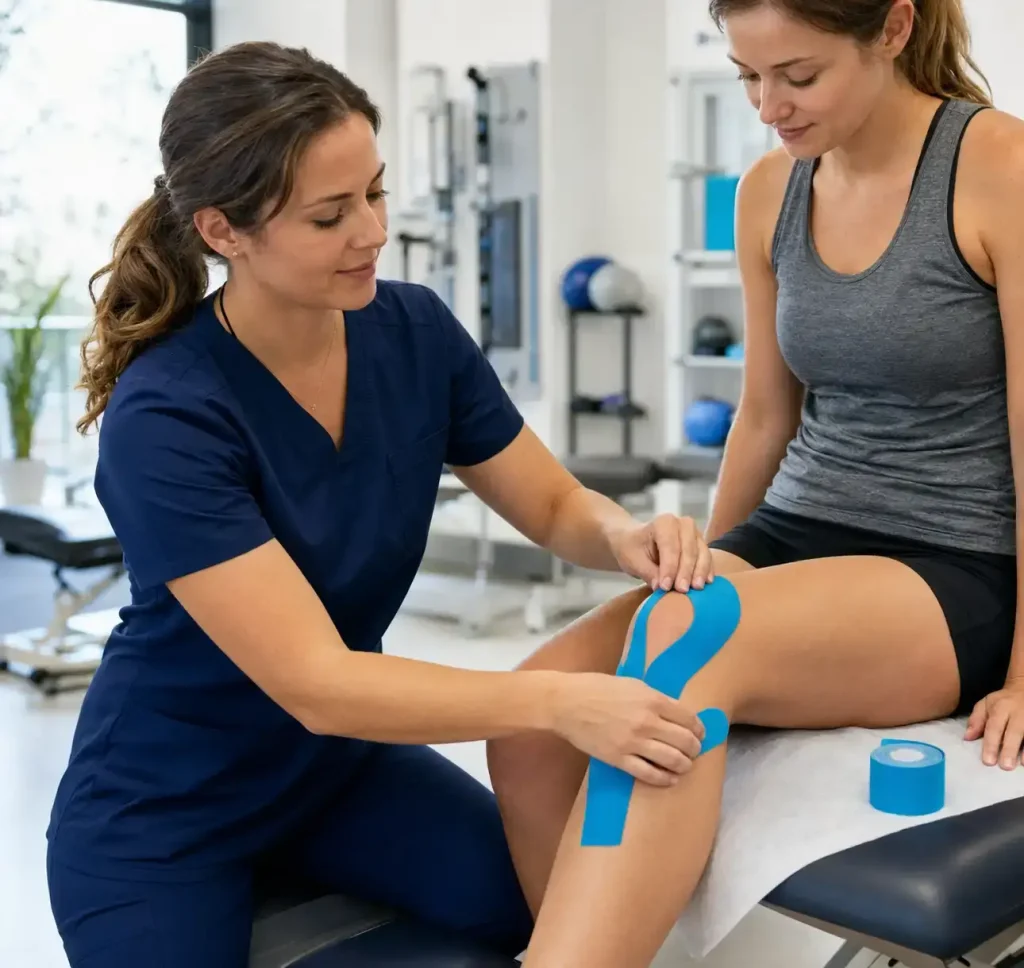
What Taping Is Intended to Do
Depending on the type of tape and how it is applied, taping may be used to:
- Provide temporary support and protection to an injured area
- Offer compression to help manage swelling
- Restrict unwanted movement of an injured joint or structure (rigid taping)
- Provide sensory feedback that may help with awareness of joint position and movement
- Provide a physical or sensory cue that may encourage awareness of movement patterns
- Provide sensory input that may influence awareness and muscle activation during movement
A Note on What the Research Actually Shows
We’d rather be straightforward with you than make big promises. Kinesio taping has become very popular, partly because it’s visible on professional athletes, but the research on it is mixed and depends on the condition and outcome being measured. Current evidence does not consistently show that kinesio tape provides better results than other approaches for pain or strength, although some studies suggest it may offer short-term benefits for certain outcomes, such as range of motion or sensory feedback, in specific situations.
In practice, we use taping as a supportive add-on to hands-on treatment and exercise rather than relying on it as the only treatment. It is not intended to replace addressing the underlying cause of your injury through an appropriate rehabilitation plan.
What to Expect During Taping
Your physiotherapist will first assess the injury or movement issue you’re dealing with to figure out whether taping is actually a useful addition to your plan, and if so, which technique and application fit your situation. The tape is applied to the skin using an appropriate technique based on the area being treated and the purpose of the application. Depending on the technique being used, the tape may be applied with different levels of stretch, direction, and positioning.
Depending on the tape and application, kinesio tape may be worn for several days and may tolerate normal activities such as showering. Rigid athletic tape is generally removed and reapplied more frequently, particularly when used for sports or physical activity.
Some people notice mild skin irritation or itchiness after taping. If that happens, let your physiotherapist know so the application or tape type can be adjusted.
Conditions We Use Taping For
Taping may be used as part of a physiotherapy treatment plan for conditions and concerns including:
- Ankle sprains
- Knee ligament injuries
- Wrist sprains
- Tennis elbow (lateral epicondylitis)
- Scapular dyskinesis (shoulder blade movement issues)
- Osteoarthritis of the knee
- Swelling around an injured joint
- Joint stability concerns following an injury
Taping may be particularly useful for athletes and active individuals who need temporary support during sports or physical activity. When appropriate, it may be included as one component of a broader sports physiotherapy treatment plan.
Taping may also be combined with manual therapy and exercise when appropriate, depending on the individual’s condition and treatment goals. For general joint and muscle injuries, it’s simply one tool among several used within our broader musculoskeletal physiotherapy programs.
Frequently Asked Questions
Does kinesio taping actually work?
The honest answer is: it depends what you’re expecting from it. The evidence does not consistently show that kinesio taping provides significant benefits for pain or strength when used on its own. Depending on the condition and application, it may provide temporary support, sensory feedback, or help with swelling management in some situations.
Your physiotherapist will be upfront with you about what taping can realistically help with in your specific case and whether it makes sense as part of your overall treatment plan.
How long can I leave the tape on?
Kinesio tape may be worn for several days depending on the tape used, the application, and how your skin responds. Some types are designed to tolerate normal activities such as showering. Rigid athletic tape is generally removed and reapplied more frequently, particularly around activity or sport. Your physiotherapist will tell you what’s appropriate for your specific application.
Can taping replace physiotherapy exercises?
No – taping can support your recovery, but it generally isn’t a substitute for addressing strength, mobility, or movement-related issues through an appropriate rehabilitation plan. It works best as one piece of a broader plan that may include exercise, manual therapy, and other physiotherapy approaches where appropriate.
Do I need a doctor's referral?
No, a doctor’s referral is not required to see a physiotherapist for taping or any of our other services. If your physiotherapist finds something that needs a physician’s input, they’ll refer you at that point.
Is taping safe for everyone?
Most people tolerate taping well, but it may not be appropriate over open wounds, active skin infections, or areas affected by a known adhesive allergy or significant skin sensitivity. Let your physiotherapist know about any skin sensitivities or reactions to adhesives before your session so they can determine whether taping is appropriate for you.
Ready to Get Started?
If you’re dealing with an injury and want to know whether taping should be part of your recovery plan, our physiotherapists can assess your situation and build a plan around what will actually help.