
Vestibular rehabilitation in Langley
If you’re experiencing a spinning sensation, dizziness or balance problems that are affecting your daily activities, you’re not alone. Vestibular disorders are a common cause of dizziness, vertigo and balance difficulties, and many vestibular conditions can improve with an appropriate assessment and rehabilitation program. At DivineCare Physio in Langley, we assess the underlying cause of your symptoms and develop an individualised treatment plan based on your assessment findings and rehabilitation needs.
What Is Vestibular Rehabilitation?
Vestibular Rehabilitation is a physiotherapy-led approach to assessing and managing conditions affecting the vestibular system the part of the inner ear and brain responsible for balance, spatial orientation and stable vision during movement.
When the vestibular system is functioning normally, it works together with your eyes, muscles and joints to help maintain balance and coordinate movement. When this system is affected, it can result in dizziness, vertigo, unsteadiness, blurred vision during head movement or a general feeling of imbalance.
Treatment is tailored to your individual condition and assessment findings. Depending on the underlying cause of your symptoms, your rehabilitation program may include specific repositioning manoeuvres, vestibular exercises, balance retraining or a combination of treatment approaches designed to support your recovery.

Signs You May Benefit From Vestibular Rehabilitation
You don’t need a confirmed diagnosis to book an assessment. Vestibular Rehabilitation may be appropriate if you experience:
- A spinning sensation (vertigo), particularly with changes in head or body position
- Dizziness or lightheadedness that occurs occasionally or persists
- Difficulty maintaining balance while standing or walking
- Feeling the need to hold onto furniture or walls for stability
- Nausea associated with head movements or changes in position
- Blurred or unstable vision when turning your head or walking
- A persistent feeling of imbalance that affects your confidence during everyday activities
- Dizziness that developed after a concussion, head injury or whiplash
If these symptoms are affecting your daily life, a vestibular assessment can help identify possible contributing factors and determine whether Vestibular Rehabilitation may be appropriate for your condition.
Conditions We Assess and Treat
Benign Paroxysmal Positional Vertigo (BPPV)
Benign Paroxysmal Positional Vertigo (BPPV) is one of the most common vestibular conditions. It occurs when tiny calcium carbonate crystals within the inner ear become displaced into one of the semicircular canals, causing incorrect signals about head movement to be sent to the brain. This can lead to brief episodes of vertigo that are commonly triggered by rolling over in bed, looking upward or bending forward.
Following a thorough assessment, BPPV may be treated using canalith repositioning manoeuvres, which are designed to guide the displaced crystals back to their appropriate location within the inner ear. Many individuals experience improvement following appropriate treatment, although the number of treatment sessions required varies depending on the individual and the nature of the condition.
Vestibular Neuritis & Labyrinthitis
Vestibular neuritis and labyrinthitis involve inflammation affecting the vestibular nerve or the inner ear, often following a viral illness. These conditions may cause sudden dizziness, vertigo, balance difficulties and, in some cases, nausea.
Vestibular Rehabilitation focuses on supporting the brain’s natural compensation process through carefully selected exercises designed to improve balance, reduce dizziness and promote recovery according to each individual’s symptoms and progress.
Menieres Disease
Menieres disease is a condition that may cause episodes of vertigo together with hearing changes, tinnitus and a sensation of fullness in the affected ear.
Vestibular Rehabilitation may form part of an overall management plan alongside the care provided by your physician or specialist. Depending on your symptoms and assessment findings, your physiotherapist may recommend exercises designed to improve balance, movement confidence and physical function between episodes where appropriate.
Benign Paroxysmal Positional Vertigo (BPPV)
Dizziness and balance problems are common following a concussion, head injury or whiplash. These conditions can affect the vestibular system, eye movements and neck function, all of which play an important role in maintaining balance and stable vision.
During your assessment, your physiotherapist will determine whether your symptoms are related to vestibular dysfunction, the cervical spine, concussion-related changes or a combination of factors. When appropriate, Vestibular Rehabilitation may be incorporated alongside our Concussion Management program to support your recovery and help you gradually return to your everyday activities, work or sport.
Neck-Related (Cervicogenic) Dizziness
In some cases, dizziness is associated with reduced movement or dysfunction in the cervical spine rather than the inner ear itself. Changes in how the neck muscles and joints communicate with the brain may contribute to dizziness, particularly during head movements.
Because of this, your vestibular assessment may also include an evaluation of your neck mobility, posture and movement. Where appropriate, treatment may include Manual Physiotherapy alongside vestibular rehabilitation to address cervical movement restrictions that may be contributing to your symptoms.
Age-Related Balance Decline & Post-Stroke Imbalance
Balance naturally changes with age, and neurological conditions such as stroke can further affect coordination, walking and postural stability. Changes involving the vestibular, visual and sensory systems may increase the likelihood of dizziness, unsteadiness and falls.
If a neurological condition is contributing to your balance difficulties, Vestibular Rehabilitation may be provided alongside Neurological Physiotherapy to address broader movement, balance and functional rehabilitation needs based on your individual assessment.
What Happens at Your Assessment?
We understand that attending an appointment while experiencing dizziness or balance problems can feel overwhelming. Your physiotherapist will take the time to understand your symptoms, perform a detailed assessment and explain their findings in clear, easy-to-understand language.
During your assessment, your physiotherapist may:
- Discuss when your symptoms began, what triggers them and how they affect your daily activities
- Review your medical history and any previous injuries or relevant health conditions
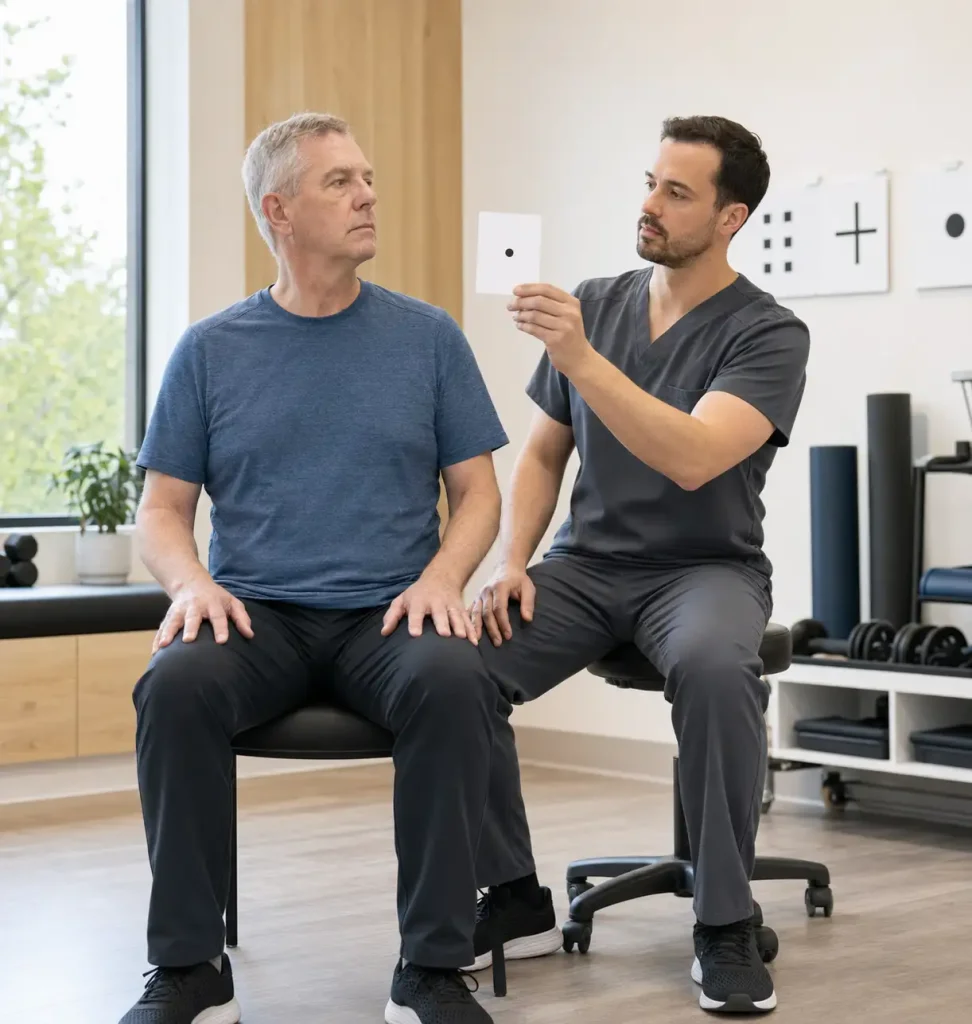
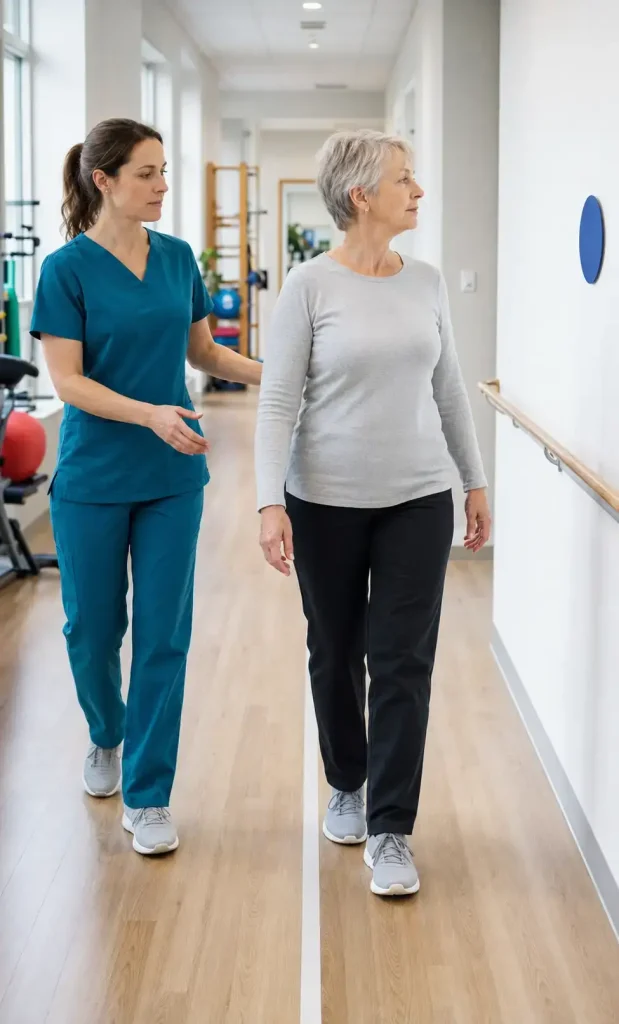
- Assess your balance, walking pattern and functional mobility
- Examine your neck movement where appropriate
- Perform positional testing to assess for signs of Benign Paroxysmal Positional Vertigo (BPPV)
- Assess eye movement and gaze stability during head movement
- Explain the assessment findings and discuss the most appropriate treatment approach for your condition
Every assessment is individualised because different vestibular conditions require different treatment approaches. Identifying the underlying cause of your symptoms helps your physiotherapist recommend the rehabilitation plan that is most appropriate for your needs.
A doctor’s referral is generally not required to book Vestibular Rehabilitation at DivineCare Physio. If your physiotherapist identifies signs or symptoms that require further medical investigation, they will recommend that you consult your physician or another appropriate healthcare professional.
Frequently Asked Questions
Do I Need a Doctor's Referral for Vestibular Rehabilitation?
No. A doctor’s referral is generally not required to book Vestibular Rehabilitation at DivineCare Physio.
If your physiotherapist identifies signs or symptoms that require further medical assessment, they may recommend that you consult your physician or another appropriate healthcare professional.
How Many Sessions Will I Need?
The number of sessions varies depending on the underlying cause of your dizziness or balance problem.
For some conditions, such as Benign Paroxysmal Positional Vertigo (BPPV), improvement may occur within a small number of treatment sessions when the condition is accurately identified and treated appropriately.
Other conditions, including vestibular neuritis, cervicogenic dizziness, concussion-related dizziness or post-stroke balance difficulties, often require a structured rehabilitation program over a longer period. After your assessment, your physiotherapist will discuss your findings, expected rehabilitation approach and an estimated treatment plan based on your individual condition and goals.
Is Vestibular Rehabilitation Safe If I'm Currently Dizzy?
Yes. Vestibular Rehabilitation is specifically designed for people who are experiencing dizziness, vertigo or balance difficulties.
Your physiotherapist will work within your current level of tolerance and select exercises and treatment techniques that are appropriate for your condition. Some exercises may temporarily reproduce mild symptoms as part of the rehabilitation process, but treatment is progressed gradually according to your response.
What Should I Bring or Do Before My Appointment?
You do not need to do any special preparation before your assessment.
We recommend wearing comfortable clothing that allows easy movement, as your assessment may include walking, balance testing, head movements and positional testing.
If available, you may also bring:
- A list of your current medications
- Relevant imaging reports or medical documents
- Information about previous concussions, head injuries or ear-related conditions
- Your ICBC or WorkSafeBC claim information, if applicable
Can Vestibular Rehabilitation Help If My Dizziness Started After a Concussion?
Yes. Dizziness is a common symptom after a concussion, and vestibular assessment is often an important part of concussion recovery.
Your physiotherapist can assess whether your symptoms are related to the vestibular system, eye movement control, neck function or other concussion-related factors. When appropriate, Vestibular Rehabilitation may be incorporated alongside our Concussion Management program to support a coordinated recovery approach.
Will the Assessment Make My Dizziness Worse?
Some assessment tests involve head movements or positional changes that may temporarily reproduce your symptoms. This can help your physiotherapist identify the underlying cause of your dizziness. Any symptom provocation is monitored carefully, and the assessment is performed at a pace that is appropriate for your comfort and safety.
Can Vestibular Rehabilitation Help Prevent Falls?
Vestibular Rehabilitation may help improve balance, stability and movement confidence in people whose dizziness or vestibular dysfunction is contributing to unsteadiness. If fall risk is a significant concern, your physiotherapist may also recommend combining vestibular treatment with our Fall Prevention Therapy & Balance Rehabilitation program to address strength, balance, coordination and functional mobility more comprehensively.
Ready to Get Started?
If you’re dealing with an injury and want to know whether taping should be part of your recovery plan, our physiotherapists can assess your situation and build a plan around what will actually help.