
Shockwave Therapy in Langley, BC
Why Patients Consider Shockwave Therapy
- Non-invasive treatment
- No surgical incisions
- No injections required
- Individualized physiotherapy assessment
- Treatment based on your condition and recovery goals
Despite its name, shockwave therapy does not involve electrical shocks. The treatment uses acoustic waves that are transmitted into the tissues through a handheld applicator.
Shockwave therapy may be considered for certain chronic tendon and musculoskeletal conditions when clinically appropriate. Suitability depends on factors such as the condition being treated, symptom duration, severity, and assessment findings.
If you are experiencing persistent tendon pain, heel pain, or certain musculoskeletal conditions that have not improved as expected, shockwave therapy may be considered as part of your physiotherapy treatment plan.
At Divine Care Physiotherapy in Langley, shockwave therapy uses acoustic waves delivered through a specialized applicator to the affected area. The treatment is designed to stimulate a biological response within the tissues and support the body’s natural healing processes.
Because many conditions treated with shockwave therapy involve muscles, tendons, ligaments, and joints, treatment is often incorporated into a broader Musculoskeletal Physiotherapy program designed to improve function, mobility, and overall recovery outcomes.
Your physiotherapist will complete a thorough assessment and determine whether shockwave therapy is appropriate for your condition and rehabilitation goals.
How Shockwave Therapy Works
Shockwave therapy delivers acoustic waves into targeted tissues to create a biological response. Depending on the condition being treated, these responses may support the body’s natural healing and tissue repair processes.
At Divine Care Physiotherapy, potential treatment effects may include:
Supports Tissue Healing
Shockwave therapy may stimulate biological processes associated with tissue repair and healing.
Stimulates Collagen Production
The treatment may stimulate collagen production. Collagen is an important structural protein found throughout tendons, ligaments, muscles, fascia, and other connective tissues.
Supports Blood Vessel Formation
Shockwave therapy may encourage the development of new blood vessels within the treated area. Improved blood supply may support normal tissue healing responses.
May Help Address Calcifications
For certain conditions involving calcifications, shockwave therapy may be considered as part of an individualized treatment approach.
Whether treatment is appropriate depends on the condition being treated and the findings of your physiotherapy assessment.
Trigger Point Release
Shockwave therapy may also be used to address areas of muscle tightness and trigger points when clinically appropriate.
Your physiotherapist will determine whether this approach is suitable based on your symptoms and overall treatment goals.
Conditions Shockwave Therapy May Help Treat
Shockwave therapy may be considered for a variety of musculoskeletal conditions depending on the individual presentation.
At Divine Care Physiotherapy, shockwave therapy is offered as a treatment option for conditions including:
Plantar Fasciitis and Heel Pain
Plantar fasciitis is one of the most common conditions treated with shockwave therapy.
This condition may cause:
- Heel pain
- Pain in the sole of the foot
- Morning stiffness
- Difficulty walking or standing
Shockwave therapy may be considered for plantar fasciitis and certain cases of heel-spur-related pain following a comprehensive physiotherapy assessment.
Because plantar fasciitis often involves movement, biomechanics, and tissue loading factors, treatment may also incorporate principles commonly used in Musculoskeletal Physiotherapy to help address contributing factors and improve long-term function.
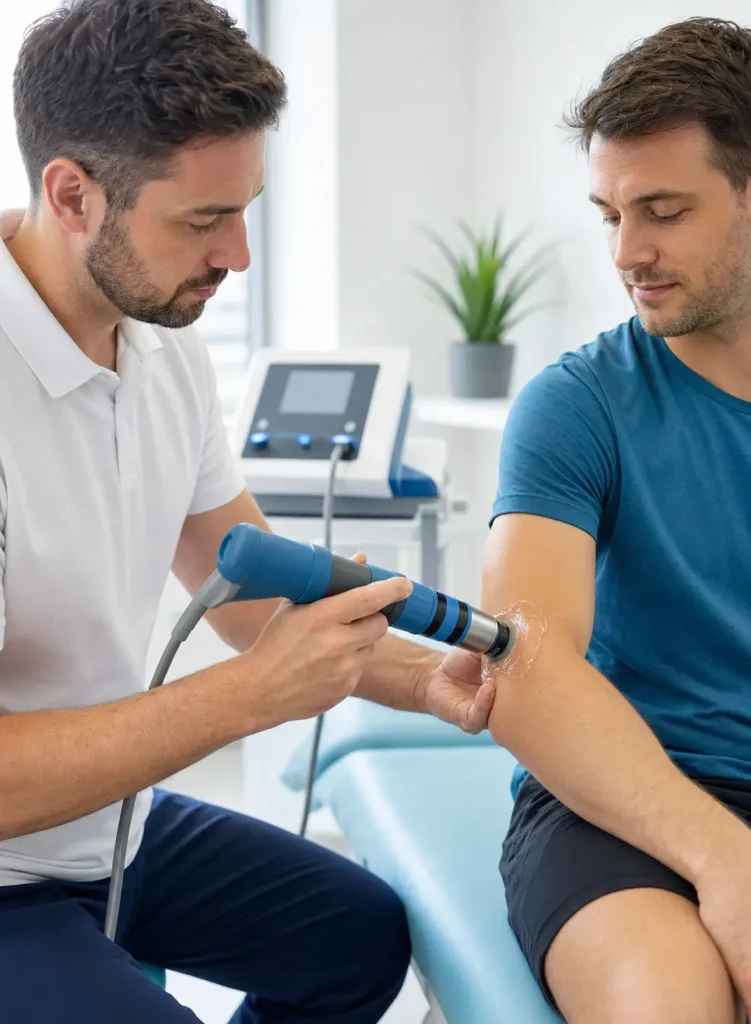
Tennis Elbow
Tennis elbow (lateral epicondylalgia) is another condition for which shockwave therapy may be considered.
This condition commonly causes:
- Pain on the outside of the elbow
- Reduced grip strength
- Pain during lifting or repetitive activities
Shockwave therapy may be incorporated into an individualized treatment plan when clinically appropriate.
In many cases, rehabilitation may also include exercise-based treatment and other physiotherapy approaches to help improve strength, function, and recovery.
Tendinitis and Chronic Tendinopathy
Shockwave therapy may be considered for certain tendon-related conditions including:
- Achilles tendinopathy
- Patellar tendinopathy
- Rotator cuff tendinopathy
- Other chronic tendon conditions
Assessment helps determine whether shockwave therapy is appropriate and whether additional rehabilitation strategies should be included as part of treatment.
Calcific Tendinopathy and Calcifications
Shockwave therapy may be considered for certain conditions involving calcific deposits. Your physiotherapist will evaluate your symptoms, medical history, and assessment findings to determine whether this treatment may be suitable.
Jumper's Knee (Patellar Tendinopathy)
Jumper’s knee is a tendon condition affecting the patellar tendon.
It commonly affects:
- Athletes
- Runners
- Basketball players
- Volleyball players
- Active individuals
Shin Splints
Shin splints, also known as medial tibial stress syndrome, can cause pain along the inner portion of the shin bone and are commonly associated with running, jumping, and repetitive impact activities.
Shockwave therapy is one of the treatment options that may be considered for shin splints depending on the individual’s symptoms and assessment findings.
Because shin splints often occur in active individuals and athletes, rehabilitation may also incorporate elements of Sports Physiotherapy to address training loads, movement mechanics, strength deficits, and a gradual return to activity.
Hip Pain
Hip pain can develop from a variety of musculoskeletal conditions affecting muscles, tendons, joints, and surrounding soft tissues.
Because the underlying cause of hip pain can vary significantly between individuals, a thorough physiotherapy assessment is essential before determining whether shockwave therapy may be appropriate.
Treatment recommendations are based on:
- Your symptoms
- Physical examination findings
- Functional limitations
- Recovery goals
Shockwave therapy may be included as part of a broader Musculoskeletal Physiotherapy treatment plan when clinically appropriate.
Back Pain
Certain forms of back pain involving muscular or soft tissue dysfunction may be considered for shockwave therapy treatment.
Because back pain can have many potential causes, your physiotherapist will conduct a comprehensive assessment to determine whether shockwave therapy is suitable for your condition.
Treatment may also include:
- Exercise therapy
- Mobility exercises
- Functional rehabilitation
- Activity modification
- Other physiotherapy approaches
The goal is to improve movement, function, and overall recovery while addressing contributing factors that may be affecting your symptoms.
Shoulder Pain
Shockwave therapy may be considered for certain shoulder conditions, including some tendon-related disorders and calcific tendon conditions.
Shoulder pain often involves multiple contributing factors, including:
- Tendon irritation
- Muscle weakness
- Movement limitations
- Joint dysfunction
- Activity-related overload
For this reason, treatment is frequently combined with exercise-based rehabilitation and Musculoskeletal Physiotherapy strategies designed to improve shoulder function and long-term outcomes.
Your physiotherapist will determine whether shockwave therapy is appropriate based on your assessment findings and individual rehabilitation goals.
What to Expect During a Shockwave Therapy Session
Assessment First
Every treatment begins with a detailed physiotherapy assessment.
Your physiotherapist will review:
- Your symptoms
- Medical history
- Physical examination findings
- Previous treatments
- Functional limitations
- Recovery goals
This assessment helps determine whether shockwave therapy is appropriate and whether other treatment approaches should also be included in your rehabilitation plan.
The Treatment
During treatment, a handheld applicator is used to deliver acoustic waves to the targeted area.
The treatment is directed at the tissues identified during your assessment and is adjusted according to your condition and tolerance.
Treatment duration varies depending on the area being treated and your individualized treatment plan.

How It Feels
Most people describe shockwave therapy as a tapping sensation within the treated tissues. Sensitivity varies between individuals.
Some people experience minimal discomfort, while others may notice temporary sensitivity during treatment. Your physiotherapist can adjust treatment settings based on your comfort level and treatment goals.
After Treatment
Some individuals experience temporary soreness or an increase in symptoms during the first 24 to 48 hours after treatment.
This response is generally temporary and often settles over time.
Your physiotherapist will provide individualized guidance regarding:
- Activity levels
- Exercise progression
- Recovery expectations
- Follow-up care

Part of an Individualized Physiotherapy Plan
Shockwave therapy is often most effective when used as part of a comprehensive physiotherapy program rather than as a standalone treatment.
Depending on your condition, treatment may also include:
- Exercise therapy
- Mobility exercises
- Strengthening programs
- Activity modification
- Manual therapy techniques
- Functional rehabilitation
Many chronic tendon and musculoskeletal conditions benefit from progressive exercise and load management strategies. For this reason, treatment may incorporate components of Kinesiology & Active Rehabilitation to help improve strength, movement quality, physical function, and long-term recovery outcomes.
Your physiotherapist will develop a treatment plan tailored to your specific condition and goals.

Benefits of Shockwave Therapy
Depending on the condition being treated, potential benefits may include:
- Non-invasive treatment
- No surgical incisions
- No injections
- May help reduce pain
- May support tissue healing processes
- May stimulate collagen production
- May support blood vessel formation
- May help address certain calcifications
- May assist with trigger point release
- Can be incorporated into a personalized physiotherapy program
Expected outcomes vary between individuals and depend on factors such as the condition being treated, symptom duration, and response to treatment.
Your physiotherapist will discuss whether shockwave therapy is appropriate for your situation.
Is Shockwave Therapy Right for Everyone?
Shockwave therapy may not be suitable for every individual or every condition.
Before treatment, your physiotherapist will assess:
- Your condition
- Medical history
- Current symptoms
- Medications
- Overall health status
This assessment helps determine whether shockwave therapy is appropriate and whether alternative treatment approaches may be more suitable.
Please inform your physiotherapist about:
- Pregnancy
- Medical conditions
- Medications
- Recent procedures
- Other health concerns
If additional medical evaluation is required, your physiotherapist may recommend consultation with your physician or another healthcare professional.
Why Choose Divine Care Physiotherapy for Shockwave Therapy in Langley?
At Divine Care Physiotherapy, shockwave therapy is offered as one component of a comprehensive physiotherapy treatment approach.
Our physiotherapists focus on:
- Thorough assessments
- Individualized treatment planning
- Evidence-supported physiotherapy techniques
- Exercise-based rehabilitation
- Functional recovery
- Ongoing progress monitoring
Rather than applying the same treatment to every patient, recommendations are based on your condition, symptoms, functional limitations, and rehabilitation goals.
Because many conditions treated with shockwave therapy involve tendons, joints, muscles, and movement dysfunction, rehabilitation is often integrated with Musculoskeletal Physiotherapy, Sports Physiotherapy, and Kinesiology & Active Rehabilitation when appropriate.
The goal is to help improve function, support recovery, and assist you in working toward your individual health and activity goals.

Does Shockwave Therapy Hurt?
Shockwave therapy is not necessarily painful, although some individuals may experience discomfort depending on the area being treated and their sensitivity levels.
Many people describe the sensation as similar to tapping within the tissues. Your physiotherapist can modify treatment settings according to your tolerance.
How Many Shockwave Therapy Sessions Will I Need?
The number of sessions varies between individuals.
Factors influencing treatment recommendations include:
- The condition being treated
- Severity of symptoms
- Duration of symptoms
- Response to treatment
- Rehabilitation goals
Your physiotherapist will develop a personalized treatment plan based on your assessment findings.
Do I Need a Doctor's Referral for Shockwave Therapy?
No.
A doctor’s referral is generally not required to see a physiotherapist at Divine Care Physiotherapy.
Your physiotherapist will assess your condition and determine whether shockwave therapy may be appropriate.
If additional medical evaluation is required, you may be referred to the appropriate healthcare professional.
Are There Any Side Effects of Shockwave Therapy?
Some individuals may experience temporary soreness or increased symptoms following treatment.
These effects are generally short-term and often improve within the first few days after treatment. Your physiotherapist will explain what to expect based on your individual treatment plan.
Who Should Not Have Shockwave Therapy?
Shockwave therapy may not be suitable for every person.
Suitability depends on factors such as:
- Medical history
- Current health status
- Condition being treated
- Individual circumstances
A physiotherapy assessment is important to determine whether treatment is appropriate.
Is Shockwave Therapy a Cure on Its Own?
Shockwave therapy should not be viewed as a guaranteed cure or the only treatment required for every condition.
It is one of several physiotherapy treatment options that may be appropriate depending on the condition and individual presentation.
In many cases, treatment is most effective when combined with exercise therapy, movement retraining, and rehabilitation strategies designed to address the underlying factors contributing to symptoms.
Frequently Asked Questions
Ready to Address Your Persistent Pain?
Book Your Shockwave Therapy Assessment Today