
Neurological Physiotherapy / Rehabilitation
Personalized rehabilitation for stroke, brain injury, and nervous system conditions – helping you improve movement, balance, and independence.
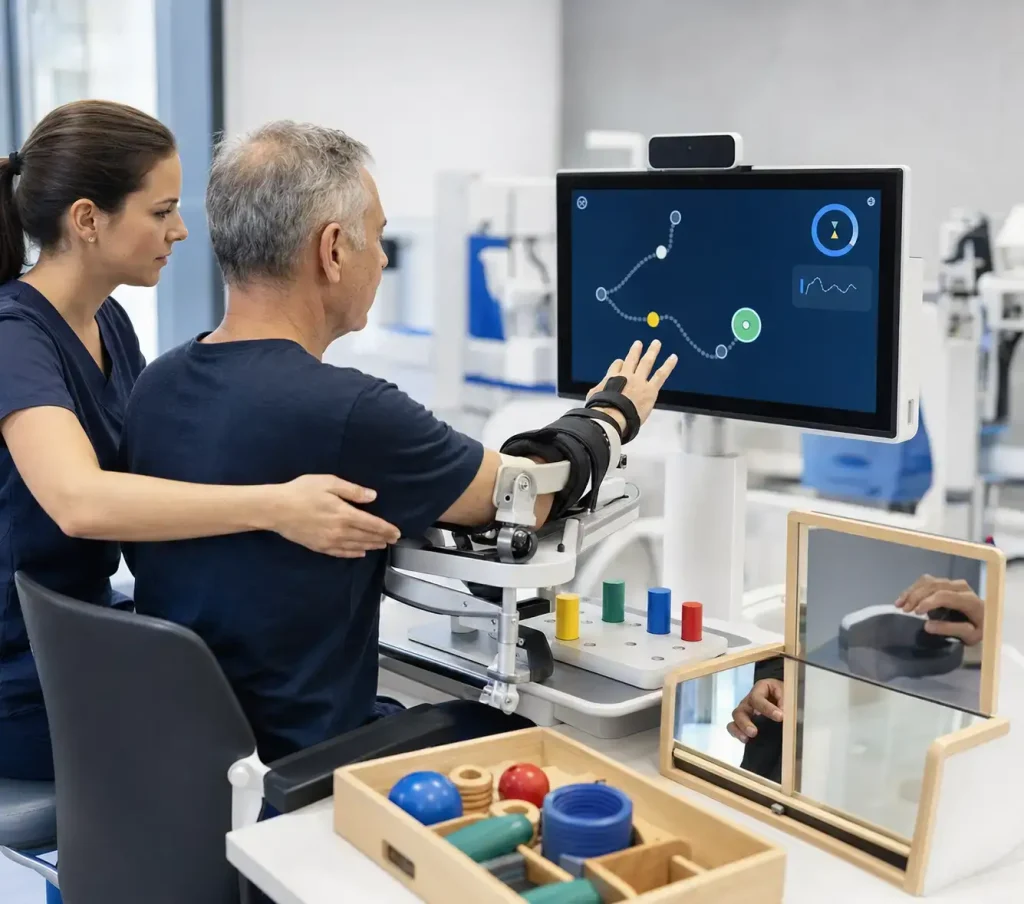
If a stroke, brain injury, or neurological condition such as Parkinson’s disease or multiple sclerosis has changed the way you move, neurological physiotherapy focuses on helping you regain confidence, improve mobility, and maximize your independence through individualized rehabilitation.
At DivineCare Physio in Langley, our physiotherapists create customized treatment plans based on your diagnosis, current abilities, personal goals, and stage of recovery. As your condition improves, your rehabilitation program evolves with you to ensure continued progress toward meaningful everyday activities.
Many neurological conditions can also affect balance, walking, and overall mobility. When appropriate, your treatment plan may work alongside our Vestibular Rehabilitation, Fall Prevention & Balance Rehabilitation, and Kinesiology & Active Rehabilitation services to provide comprehensive support for your recovery—all conveniently available under one roof at our Langley clinic.
What Is Neurological Physiotherapy?
Neurological physiotherapy (also known as neuro-rehabilitation) is a specialized area of physiotherapy focused on treating conditions that affect the brain, spinal cord, and peripheral nervous system. Since the nervous system controls movement, coordination, balance, muscle activation, and posture, neurological disorders can significantly impact a person’s ability to perform everyday activities safely and independently.
The goal of neurological physiotherapy is to improve functional movement, encourage efficient movement patterns, and help individuals regain strength, coordination, flexibility, and balance through evidence-informed rehabilitation techniques.
Treatment focuses on improving activities such as:
- Walking safely and confidently
- Standing up and sitting down independently
- Climbing stairs
- Improving balance and coordination
- Transferring between bed, chair, or wheelchair
- Performing everyday household and personal activities
- Returning to work, hobbies, or recreational activities whenever possible
Depending on your individual needs, neurological rehabilitation may also be combined with Manual Physiotherapy to improve joint mobility and reduce muscle stiffness, while Kinesiology & Active Rehabilitation can help restore overall physical conditioning and long-term functional strength as your recovery progresses.

Multiple Sclerosis (MS)
People living with multiple sclerosis may experience weakness, fatigue, coordination difficulties, balance impairments, and changes in mobility. Treatment focuses on maintaining function, improving movement efficiency, and supporting long-term independence.
Bell's Palsy & Facial Palsy
Targeted rehabilitation exercises may help improve facial muscle activation, coordination, and movement patterns while supporting overall recovery.
Peripheral Nerve Injuries
Peripheral nerve injuries can affect strength, sensation, coordination, and movement. Neurological physiotherapy aims to improve muscle function, mobility, and overall physical performance during recovery.
Balance Disorders & Increased Fall Risk Related to Neurological Conditions
If you don’t see your specific condition listed, contact our team. Many neurological conditions share similar rehabilitation goals, and our physiotherapists can discuss whether neurological physiotherapy may be appropriate for your situation.
Conditions We Treat
Our physiotherapists work with individuals experiencing a wide range of neurological conditions that affect movement, balance, coordination, strength, and overall function. Every condition presents differently, which is why treatment plans are tailored to your specific symptoms, goals, and stage of recovery.
We commonly help patients with:
Stroke Rehabilitation
Recovering after a stroke often involves rebuilding strength, improving balance, restoring mobility, and relearning functional movements. Neurological physiotherapy can help improve walking ability, coordination, and confidence with everyday activities while promoting greater independence.
Traumatic Brain Injury (TBI) & Acquired Brain Injury
Brain injuries can affect movement, balance, muscle control, coordination, and physical endurance. Rehabilitation focuses on restoring functional abilities and helping patients safely return to their daily activities whenever possible.
Spinal Cord Injury
Neurological rehabilitation can help improve mobility, strength, transfers, balance, and overall function following a spinal cord injury while maximizing independence and quality of life.
Parkinson's Disease
Parkinson’s disease may lead to stiffness, slowed movement, balance problems, and changes in walking patterns. Physiotherapy aims to improve mobility, maintain physical function, enhance balance, and reduce the risk of falls.
What Neurological Physiotherapy Involves
Every rehabilitation program begins with a comprehensive assessment of your condition, movement patterns, balance, strength, coordination, mobility, and functional goals. This allows your physiotherapist to develop an individualized treatment plan designed specifically for your needs.
Depending on your condition and stage of recovery, treatment may include:
Gait Training
Improving walking mechanics, step patterns, weight shifting, and overall mobility to help you move more safely and efficiently.
Balance and Coordination Exercises
Targeted exercises designed to improve stability, coordination, body awareness, and confidence during movement. Patients experiencing dizziness or vestibular dysfunction may also benefit from our Vestibular Rehabilitation program when appropriate.
Strengthening Exercises
Exercises that target muscles affected by neurological conditions to improve strength, endurance, and functional movement capacity.
Functional Movement Training
Practicing real-life activities such as sitting, standing, walking, climbing stairs, transferring, and other daily tasks to improve independence and confidence.
Neuromuscular Re-Education
Techniques and exercises that help improve movement control, muscle activation, coordination, and efficient movement patterns.
Manual Therapy
When appropriate, Manual Physiotherapy techniques may be incorporated to improve joint mobility, address soft tissue restrictions, and help manage muscle stiffness that may interfere with movement.
Safe Mobility Strategies & Assistive Device Education
Guidance on safe movement techniques, fall prevention strategies, and the proper use of assistive devices when necessary.
Active Rehabilitation & Conditioning
As recovery progresses, your treatment plan may also include Kinesiology & Active Rehabilitation to further improve strength, endurance, mobility, and long-term functional capacity.
Where appropriate, your rehabilitation program may integrate several services, including Vestibular Rehabilitation, Fall Prevention & Balance Rehabilitation, Kinesiology & Active Rehabilitation, and Manual Physiotherapy, allowing you to receive comprehensive neurological rehabilitation in one convenient location at our Langley clinic.

Who Neurological Physiotherapy Is For
Neurological physiotherapy can benefit individuals at various stages of recovery, whether you’re healing from a recent neurological event or managing a long-term neurological condition. Every rehabilitation program is tailored to your current abilities, medical history, and personal goals, with exercises progressing as your strength, mobility, and confidence improve.
This service may be appropriate if you are:
- Recovering from a stroke
- Living with Parkinson’s disease or multiple sclerosis
- Recovering from a traumatic or acquired brain injury
- Recovering from a spinal cord injury
- Experiencing peripheral nerve injuries
- Managing balance problems or dizziness related to a neurological condition
- At an increased risk of falls due to neurological impairment
- Looking to improve walking ability, coordination, strength, or functional independence
For individuals experiencing dizziness, vertigo, or vestibular disorders alongside neurological symptoms, treatment may also include our Vestibular Rehabilitation program. Likewise, patients with reduced balance or concerns about falling may benefit from our Fall Prevention & Balance Rehabilitation service as part of a comprehensive recovery plan.
No matter where you are in your recovery journey, our goal is to help you move more safely, improve your confidence, and maximize your independence through evidence-based neurological rehabilitation.
Why Choose DivineCare Physio for Neurological Rehabilitation in Langley
Personalized Treatment Plans
No two neurological conditions affect people in the same way. That’s why every rehabilitation program is customized to your diagnosis, current functional abilities, lifestyle, and recovery goals. As your condition changes, your treatment plan is adjusted to help you continue making meaningful progress.
Comprehensive Care Under One Roof
Neurological rehabilitation often involves much more than improving strength alone. Depending on your individual needs, your treatment plan may incorporate multiple physiotherapy services available at DivineCare Physio, including:
- Vestibular Rehabilitation for dizziness, vertigo, and vestibular-related balance disorders.
- Fall Prevention & Balance Rehabilitation to improve stability, reduce fall risk, and build confidence during everyday activities.
- Kinesiology & Active Rehabilitation to restore strength, endurance, flexibility, and long-term physical conditioning.
- Manual Physiotherapy to improve joint mobility, reduce muscle stiffness, and support comfortable movement where clinically appropriate.
Having access to these complementary services in one clinic allows your rehabilitation program to evolve with your recovery while providing coordinated, patient-centered care.
Experienced Physiotherapists
Our physiotherapists take the time to understand your medical history, assess your condition thoroughly, and develop a personalized rehabilitation plan based on your individual goals. Throughout your treatment, we’ll explain every stage of your recovery in clear, easy-to-understand language, ensuring you feel informed and supported.
Convenient Langley Location
DivineCare Physio is conveniently located at Thunderbird Village, D109 – 20159 88 Ave, Langley, making it easy to access high-quality neurological rehabilitation close to home.
Frequently Asked Questions
Do I need a doctor's referral for neurological physiotherapy?
No. A doctor’s referral is not required to see a physiotherapist in British Columbia. You can book an assessment directly with our team. If your physiotherapist believes additional medical evaluation or collaboration with another healthcare provider is appropriate, they will discuss the next steps with you.
How many neurological physiotherapy sessions will I need?
The number of sessions varies depending on your condition, its severity, your rehabilitation goals, and how you respond to treatment. Following your initial assessment, your physiotherapist will recommend a personalized treatment plan and adjust it as your recovery progresses.
Is neurological physiotherapy different from general physiotherapy?
Yes. While general physiotherapy commonly focuses on muscles, joints, ligaments, and soft tissues, neurological physiotherapy specializes in conditions affecting the brain, spinal cord, and nervous system. Treatment emphasizes improving movement control, balance, coordination, walking ability, strength, and functional independence through targeted rehabilitation techniques.
Can neurological physiotherapy help with balance problems and fall risk?
Yes. Many neurological conditions affect balance, coordination, and walking, increasing the risk of falls. Neurological physiotherapy includes exercises designed to improve stability, mobility, and confidence during everyday activities. When appropriate, your treatment plan may also incorporate our Fall Prevention & Balance Rehabilitation program for additional balance training and fall prevention strategies.
Can neurological physiotherapy help with dizziness?
Some neurological conditions may contribute to dizziness or balance disturbances. If your symptoms are related to vestibular dysfunction, your physiotherapist may recommend integrating our Vestibular Rehabilitation service into your rehabilitation plan to help improve balance, reduce dizziness, and restore confidence with movement.
What conditions can benefit from neurological physiotherapy?
Neurological physiotherapy may benefit individuals recovering from or living with conditions such as:
- Stroke
- Traumatic brain injury (TBI)
- Acquired brain injury
- Spinal cord injury
- Parkinson’s disease
- Multiple sclerosis (MS)
- Bell’s palsy and facial palsy
- Peripheral nerve injuries
- Other neurological conditions affecting movement, balance, coordination, or functional mobility
If you’re unsure whether neurological physiotherapy is appropriate for your condition, our team will be happy to discuss your symptoms and recommend the most suitable treatment approach.
Can neurological physiotherapy be combined with other physiotherapy treatments?
Yes. Depending on your condition and rehabilitation goals, your treatment plan may include complementary services such as Manual Physiotherapy, Kinesiology & Active Rehabilitation, Vestibular Rehabilitation, or Fall Prevention & Balance Rehabilitation. Combining these services when clinically appropriate allows for a more comprehensive rehabilitation program that addresses strength, mobility, balance, and overall function.
Book Your Neurological Physiotherapy Assessment Today
Take the first step toward improving your mobility, independence, and quality of life with a personalized neurological rehabilitation program.