
Manual Physiotherapy
Skilled, Hands-On Treatment to Reduce Pain and Restore Movement
When a joint feels stiff or a muscle stays tight despite your usual efforts to move and stretch it, a hands-on assessment can help your physiotherapist identify areas that may be contributing to your symptoms. Manual physiotherapy is a hands-on treatment approach where your physiotherapist uses specific techniques to assess and treat joints, muscles, and soft tissues that may be contributing to pain or restricted movement.
At Divine Care Physiotherapy in Langley, manual therapy is one of the treatment approaches our physiotherapists use, often alongside targeted exercise and, where appropriate, other treatments such as Intramuscular Stimulation (IMS) and Dry Needling, to help improve mobility and manage pain as part of a broader physiotherapy treatment plan.
What Is Manual Physiotherapy?
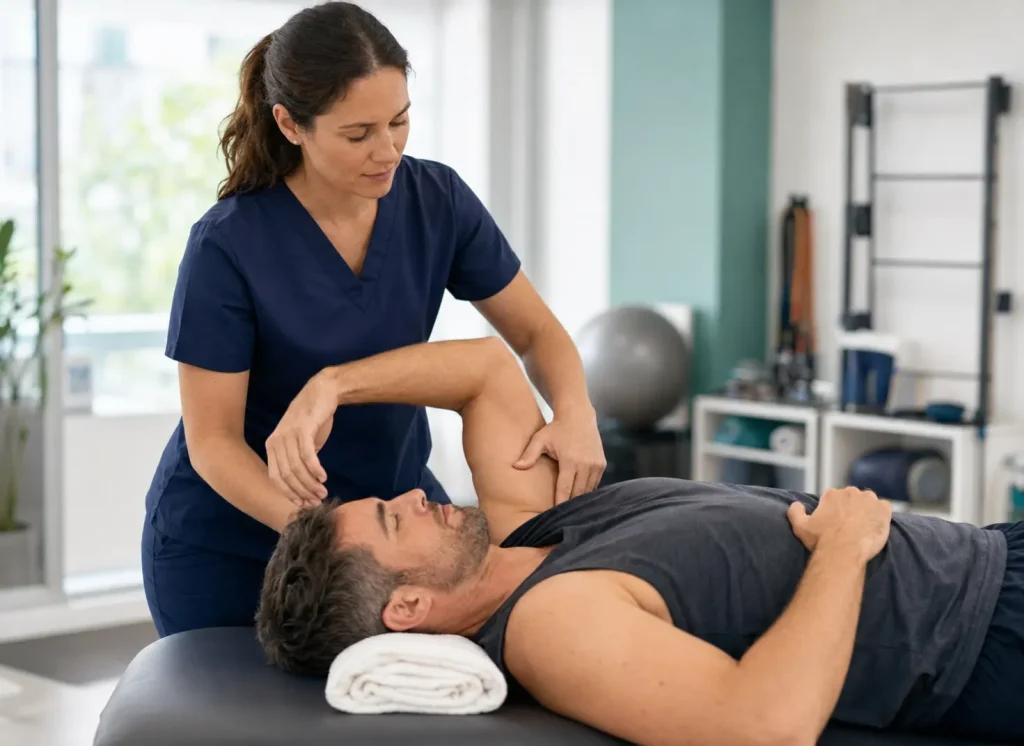
Manual physiotherapy is a hands-on component of physiotherapy where the therapist applies specific, skilled techniques directly to the affected joints and soft tissues. Rather than relying only on general exercise, your physiotherapist uses their hands to assess where movement may be restricted or tissue may feel tight, then applies a technique matched to your specific needs.
Manual therapy may be used to address joint stiffness, muscle tightness, or movement restrictions and is often combined with an active exercise program. Your physiotherapist will determine which combination of hands-on treatment and exercise is appropriate for your condition as part of your individual treatment plan.
Manual Therapy Techniques We Use
Our physiotherapists are trained in a range of manual techniques and select the right combination based on your assessment findings, rather than following a one-size-fits-all protocol.
Joint Mobilization
Gentle, graded movements applied to a stiff or restricted joint that may help improve joint mobility or range of motion where appropriate. The amount of pressure and the rhythm are adjusted based on your comfort and the specific joint involved.
Soft Tissue Release
Manual techniques applied to muscles and surrounding soft tissues that may help reduce perceived tightness, improve movement, and ease muscular discomfort.
Trigger Point Release
Focused pressure applied to specific tender or sensitive areas within a muscle that may contribute to local or referred pain. For example, muscle tenderness in the neck may contribute to some types of tension-related headaches.
Manual Traction
A controlled pulling force applied to a joint, commonly the neck or lower back, with the aim of reducing discomfort and improving movement in appropriate cases.
Mulligan Mobilizations
A mobilization technique where a physiotherapist applies a specific manual technique while you actively move the affected area, aiming to help improve movement with less discomfort during the session.
Maitland Mobilizations
A graded, systematic approach to joint mobilization where the physiotherapist adjusts the grade and rhythm of movement based on your response, commonly used for spinal and peripheral joint stiffness.
Your physiotherapist will explain which of these techniques may be appropriate for your specific condition and why, as part of your assessment and treatment plan.
Conditions Manual Therapy Can Help With
Manual physiotherapy may be used as part of a treatment plan for conditions involving:
- Joint stiffness (spine, shoulder, hip, knee, ankle, and other joints)
- Tight or overactive muscles
- Trigger points and localized muscle pain
- Painful or restricted joints following injury
- Neck and back pain related to stiffness or muscle guarding
- Reduced range of motion after immobilization or inactivity
If your condition involves a sports injury or requires rehabilitation after surgery, manual therapy may be considered as one component of a broader treatment plan. See our Sports Physiotherapy and Post-Surgical Physiotherapy pages for more information on how we approach rehabilitation in these situations.

What to Expect During a Manual Physiotherapy Session
1. Assessment first.
Your physiotherapist examines the affected joint or muscle, checks your range of motion, and assesses where movement may be restricted or what factors may be contributing to your symptoms before starting hands-on treatment.
2. Hands-on treatment.
Based on the assessment, your physiotherapist applies the appropriate technique — such as mobilization, soft tissue release, trigger point work, or traction — directly to the area involved when appropriate.
3. Active exercise.
Manual therapy may be combined with active exercise when appropriate. Your physiotherapist may provide a home exercise or strengthening program so you can continue working on mobility, strength, and function between visits. This complements the active rehabilitation approach used in our Kinesiology & Active Rehabilitation programs.
4. Reassessment.
Your physiotherapist checks your response to treatment and adjusts the plan for your next visit, since every person’s body responds differently.
Why Choose Divine Care Physiotherapy for Manual Therapy in Langley
- Experienced physiotherapists trained in a range of manual techniques, matched to your specific condition rather than a generic protocol
- Treatment plans that may combine manual therapy with active exercise, IMS/dry needling, or other physiotherapy approaches when appropriate
- Continuous professional development — our team keeps learning current manual therapy techniques
- Personalized treatment plans tailored to your individual needs
- No doctor’s referral required to book

Frequently Asked Questions
Do I need a doctor's referral for manual physiotherapy?
No, a doctor’s referral is not necessary. If your physiotherapist identifies something during your assessment that needs a physician’s input, they’ll refer you at that point.
How many sessions will I need?
This depends on your specific condition, how long you’ve had it, and how your body responds to treatment. Your physiotherapist will assess you first and build a treatment plan aimed at helping you return to your normal activities as efficiently as possible. We’ll discuss the expected timeline with you directly rather than guessing in advance.
Is manual therapy painful?
Techniques are adjusted to your comfort level. Some mobilization or soft tissue work can feel like pressure or mild discomfort, particularly around a tight or sensitive area, but your physiotherapist will work within a level you can tolerate comfortably and adjust the technique as needed.
Can manual therapy be combined with other treatments?
Yes. It may be paired with active exercise and, depending on your condition, other services we offer such as IMS/dry needling or shockwave therapy. Your physiotherapist will recommend a combination based on your assessment and individual treatment needs.
What conditions is manual therapy not suitable for?
Manual therapy isn’t appropriate for every person or every condition. Depending on your medical history and the nature of your symptoms, some situations may require a different approach or further medical assessment first. This is why an initial assessment is important: your physiotherapist will determine whether manual therapy is appropriate for you before treatment begins.
Book Your Manual Physiotherapy Appointment in Langley
If joint stiffness, muscle tightness, or pain is limiting your movement, our physiotherapists can assess you and build a hands-on treatment plan suited to your specific condition.