
Concussion Management in Langley
Individualized concussion assessment and rehabilitation focused on symptoms such as dizziness, balance difficulties, headaches, visual disturbances, and cognitive challenges.
A concussion can affect much more than causing a headache. Depending on the nature of the injury, individuals may experience dizziness, balance problems, visual changes, fatigue, difficulty concentrating, memory challenges, nausea, or emotional symptoms that interfere with daily activities.
At Divine Care Physio in Langley, concussion management focuses on understanding your symptoms, identifying factors that may be affecting your recovery, and developing an individualized rehabilitation plan tailored to your needs. Because concussion symptoms can involve the vestibular system, neck, balance, and physical function, rehabilitation may incorporate components of Vestibular Rehabilitation and other physiotherapy services when clinically appropriate.
What Is a Concussion?
A concussion is a mild traumatic brain injury caused by biomechanical forces acting on the body and head. It can occur following:
- A direct blow to the head
- A blow to the face or jaw
- A force transmitted through the neck
- A force applied elsewhere on the body that causes rapid movement of the head
Concussion symptoms may appear immediately after an injury or develop gradually over minutes or hours.
Every concussion is different. Some individuals recover quickly, while others experience symptoms that persist and affect daily activities, work, school, recreation, or sport participation.
Concussion may occur on its own or alongside other injuries, including:
- Cervical spine injuries
- Whiplash-associated disorders
- Vestibular dysfunction
- Balance impairments
- Musculoskeletal injuries
Because concussion can involve multiple body systems, a thorough assessment is often important when symptoms continue beyond the initial stages of recovery.
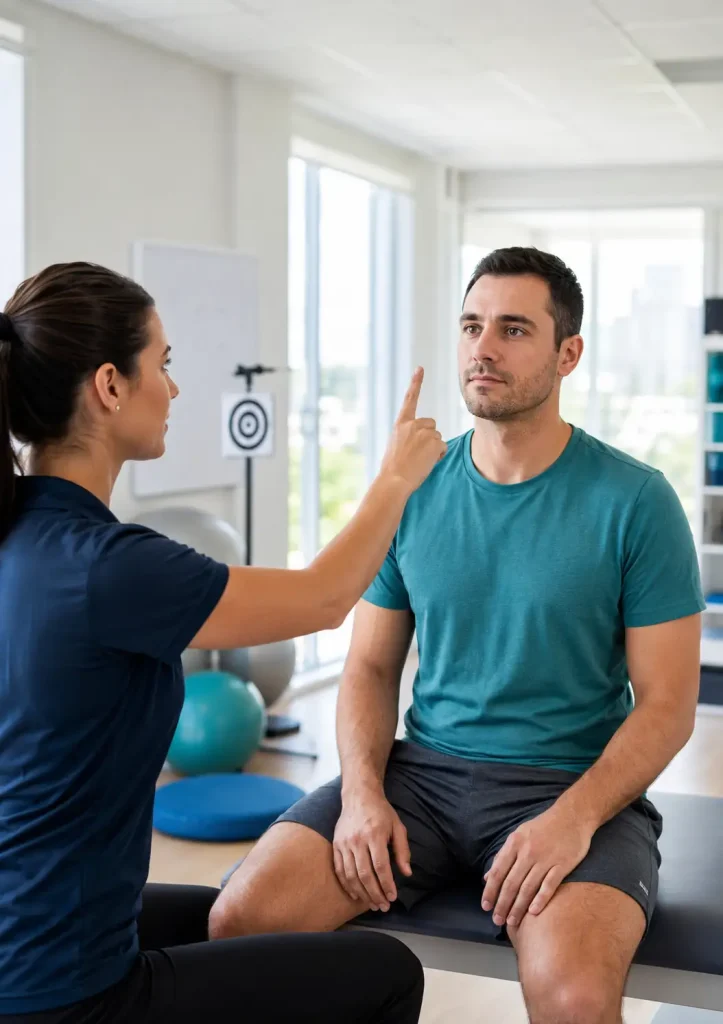
Signs and Symptoms of Concussion
Concussion symptoms vary between individuals and may affect physical, cognitive, emotional, and sensory function.
Common symptoms include:
- Headaches
- Dizziness
- Vertigo
- Balance problems
- Memory difficulties
- Difficulty concentrating
- Mental fatigue
- Visual disturbances
- Light sensitivity
- Noise sensitivity
- Nausea
- Sleep disturbances
- Emotional changes
- Irritability
- Anxiety
- Neck pain
Not everyone experiences the same symptoms, and symptom severity can vary considerably from person to person.
If you experience symptoms following a head injury, sports injury, fall, motor vehicle accident, or another event that may have caused a concussion, an appropriate healthcare assessment can help determine the next steps in your recovery.
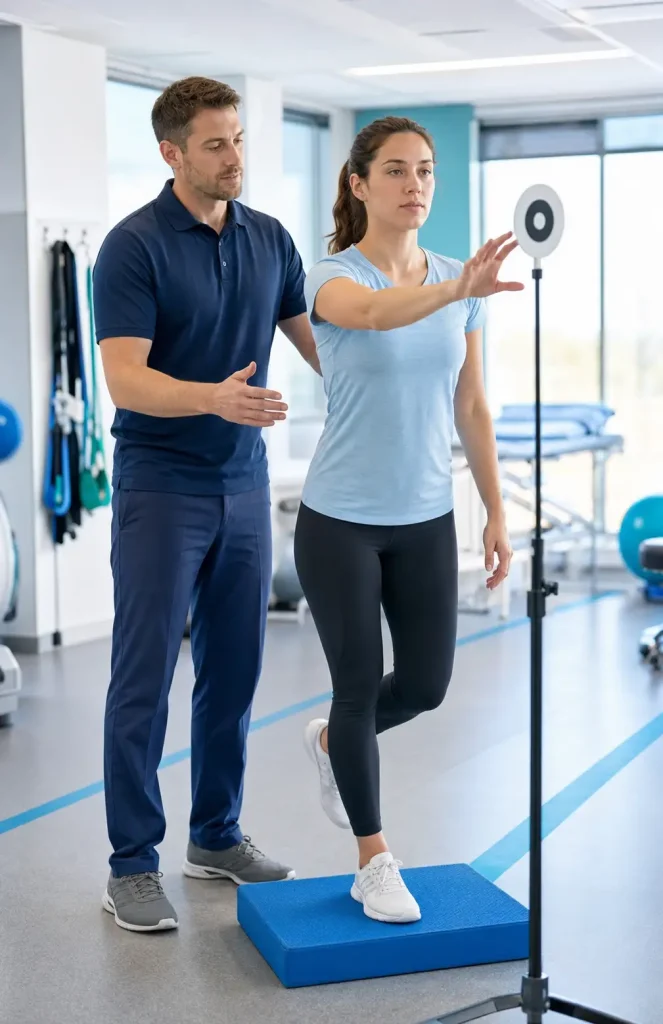
Our Approach to Concussion Management
No two concussions are exactly alike. Effective rehabilitation begins with understanding your specific symptoms, limitations, and recovery goals.
Your physiotherapist will assess your condition and determine which systems may be contributing to your symptoms.
Vestibular Function
The vestibular system plays a critical role in balance, spatial awareness, and visual stability. Following a concussion, vestibular dysfunction may contribute to symptoms such as:
- Dizziness
- Vertigo
- Imbalance
- Motion sensitivity
- Visual instability
- Difficulty focusing during movement
Because vestibular dysfunction is commonly associated with concussion, assessment may include screening for vestibular impairments. Where appropriate, rehabilitation may incorporate principles used in Vestibular Rehabilitation to address dizziness, balance difficulties, and visual-motion sensitivity.
Balance and Coordination
Concussion can affect balance, movement control, and coordination.
Assessment may include evaluation of:
- Static balance
- Dynamic balance
- Walking mechanics
- Functional movement
- Postural control
Rehabilitation may include exercises designed to improve balance and functional stability where appropriate to your presentation.
Cervical Spine and Neck Function
Many individuals experience neck pain, headaches, stiffness, or whiplash-related symptoms alongside concussion.
Because the cervical spine can contribute to symptoms that resemble or accompany concussion, your assessment may include evaluation of:
- Neck mobility
- Muscle function
- Joint movement
- Postural control
- Movement-related symptoms
Where appropriate, treatment may incorporate techniques commonly used in Manual Physiotherapy to address cervical spine dysfunction and support overall recovery.
Visual Symptoms
Visual disturbances are common after concussion and may include:
- Blurred vision
- Difficulty focusing
- Eye strain
- Sensitivity to light
- Difficulty tracking moving objects
Your physiotherapist will consider visual symptoms as part of your overall presentation and determine whether additional assessment or referral may be appropriate.
Cognitive and Emotional Symptoms
Concussion may affect:
- Attention
- Concentration
- Memory
- Processing speed
- Mental endurance
Some individuals may also experience emotional symptoms such as stress, frustration, anxiety, or mood changes during recovery.
Assessment considers how these symptoms affect daily function and whether additional healthcare support may be beneficial as part of a multidisciplinary recovery approach.
How We Help With Concussion Recovery
Concussion recovery should be individualized based on your symptoms, functional limitations, and stage of recovery.
Depending on your assessment findings, concussion management may involve:
- Comprehensive symptom assessment
- Education regarding concussion recovery
- Monitoring symptom progression
- Vestibular rehabilitation when vestibular impairments are identified
- Cervical rehabilitation when neck-related symptoms are present
- Balance and coordination training where appropriate
- Gradual return-to-activity planning
- Exercise-based rehabilitation
- Ongoing reassessment and progression of treatment
Your rehabilitation plan will be adjusted according to your symptoms, goals, and recovery progress.

Cervical Rehabilitation and Neck-Related Symptoms
Concussion frequently occurs alongside cervical spine injuries, particularly following motor vehicle accidents, sports injuries, and falls.
Neck-related problems may contribute to:
- Headaches
- Neck pain
- Dizziness
- Stiffness
- Movement-related symptoms
When cervical dysfunction is identified, rehabilitation may include strategies commonly used in Manual Physiotherapy to help improve neck mobility, movement quality, and overall function as part of your recovery plan.
Vestibular Rehabilitation for Concussion-Related Dizziness
Dizziness is one of the most common symptoms experienced following concussion. In some cases, dizziness may be related to dysfunction within the vestibular system, which helps regulate balance, movement awareness, and visual stability.
If vestibular impairments are identified during assessment, rehabilitation may incorporate components of Vestibular Rehabilitation to address symptoms such as:
- Dizziness
- Vertigo
- Motion sensitivity
- Visual instability
- Balance difficulties
Treatment recommendations are always based on your individual assessment findings and rehabilitation needs.
Because concussion can involve multiple body systems, a thorough assessment is often important when symptoms continue beyond the initial stages of recovery.
Return to Physical and Cognitive Activity
Current concussion management guidelines generally support a gradual return to activity following an initial period of rest, provided activities do not significantly worsen symptoms.
Your physiotherapist may provide guidance regarding:
- Return to work
- Return to school
- Physical activity progression
- Exercise tolerance
- Daily activity modification
- Symptom management strategies
The pace of progression varies between individuals and is determined by symptom response and recovery status.
Sports-Related Concussion Rehabilitation
- Training
- Competition
- Physical conditioning
- Sport-specific movements
Falls and Everyday Accidents
- Slip-and-fall incidents
- Workplace injuries
- Household accidents
Other Traumatic Events
- Direct head impacts
- Facial injuries
- Neck injuries
- Traumatic brain injuries
Individuals may experience symptoms such as:
- Headaches
- Dizziness
- Balance difficulties
- Visual disturbances
- Fatigue
- Difficulty concentrating
- Memory challenges
- Neck pain
If symptoms are affecting your daily activities, work, education, recreation, or quality of life, a physiotherapy assessment may help determine appropriate rehabilitation options.
Who We See
Concussion management may be appropriate for individuals experiencing symptoms following:
Sports Injuries
- Contact sports
- Recreational activities
- Athletic collisions
- Falls during sports participation
Motor Vehicle Accidents
- Whiplash injuries
- Head trauma
- Acceleration-deceleration injuries
Why Choose Divine Care Physio for Concussion Management in Langley?
Individualized Assessment and Rehabilitation
Concussion symptoms vary significantly from person to person.
Rather than using a one-size-fits-all approach, rehabilitation is based on:
- Your symptoms
- Functional limitations
- Physical examination findings
- Recovery goals
- Response to treatment
This individualized approach helps ensure rehabilitation is relevant to your specific needs.
Active Recovery Approach
Current concussion management recommendations generally support a gradual return to cognitive and physical activity following an initial period of rest. Divine Care’s concussion information emphasizes that prolonged absolute rest is no longer considered the preferred approach for most individuals.
Your rehabilitation plan may therefore include progressive activity recommendations designed around your symptom tolerance and recovery status. Where appropriate, rehabilitation may also incorporate exercise progression strategies commonly used in Kinesiology and Active Rehabilitation to help improve physical function and support a safe return to normal activities.
Expertise in Vestibular and Cervical Rehabilitation
Many concussion symptoms involve systems beyond the brain alone.
Vestibular dysfunction, balance impairments, and cervical spine issues may all contribute to ongoing symptoms.
Divine Care Physio provides:
- Vestibular Rehabilitation
- Manual Physiotherapy
- Active Rehabilitation
- Sports Physiotherapy
- Musculoskeletal Physiotherapy
Depending on your assessment findings, your physiotherapist can determine which rehabilitation approaches may be appropriate for your condition.
Comprehensive Rehabilitation Services
Because concussion symptoms can affect multiple body systems, access to a range of rehabilitation services can be beneficial.
Divine Care Physio offers services including:
- Vestibular Rehabilitation
- Manual Physiotherapy
- Sports Physiotherapy
- Musculoskeletal Physiotherapy
- Neurological Physiotherapy
- Kinesiology & Active Rehabilitation
- Fall Prevention & Balance Rehabilitation
Treatment recommendations are always based on individual assessment findings and rehabilitation goals.
Do I Need a Doctor's Referral for Concussion Management?
No. A doctor’s referral is generally not required to book a physiotherapy appointment at Divine Care Physio.
However, if your physiotherapist identifies concerns requiring medical assessment, you may be advised to consult your physician or another healthcare professional.
How Many Sessions Will I Need?
Recovery varies considerably between individuals.
The number of physiotherapy sessions required may depend on:
- The severity of symptoms
- Duration of symptoms
- Presence of vestibular dysfunction
- Neck-related involvement
- Functional goals
- Response to rehabilitation
Your physiotherapist will develop an individualized treatment plan and adjust it based on your progress.
Is Rest the Best Treatment for a Concussion?
Current concussion management recommendations generally support a brief period of relative rest followed by a gradual return to activity as tolerated.
Divine Care’s concussion information notes that prolonged absolute rest is no longer considered the preferred recovery strategy for most people. The appropriate level of activity varies depending on your symptoms and stage of recovery.
How Long Does Concussion Recovery Take?
Recovery time varies significantly.
Some individuals recover within a relatively short period, while others experience symptoms that persist for weeks or longer.
Factors influencing recovery may include:
- Nature of the injury
- Symptom severity
- Presence of vestibular dysfunction
- Cervical spine involvement
- Individual health factors
Your physiotherapist can assess your symptoms and discuss an appropriate rehabilitation plan based on your situation.
Can Physiotherapy Help With Dizziness After a Concussion?
Dizziness is a common symptom following concussion.
In some individuals, dizziness may be associated with vestibular dysfunction, balance impairments, cervical spine involvement, or other contributing factors.
Divine Care Physio provides Vestibular Rehabilitation, and its vestibular rehabilitation information identifies concussion, head trauma, and whiplash among conditions that may be associated with vestibular impairment.
An assessment can help determine whether vestibular rehabilitation or another treatment approach may be appropriate.
When Should I Seek an Assessment?
Consider seeking an assessment if you have experienced a head injury or traumatic event and are experiencing symptoms such as:
- Headaches
- Dizziness
- Balance problems
- Visual disturbances
- Fatigue
- Memory difficulties
- Concentration challenges
- Neck pain
If symptoms are severe, worsening, or concerning, seek immediate medical attention.
Frequently Asked Questions
Ready to Take the Next Step in Your Concussion Recovery?
Book Your Concussion Assessment Today