
Sports Physiotherapy and Youth Sports Physiotherapy
An injury that stops you training is more than a sore knee. It can mean a missed season, a lost fitness base, and the worry that the same problem may return as soon as you get back to your sport.
Divine Care Physiotherapy is a Langley clinic in Walnut Grove treating sports and athletic injuries for recreational athletes, competitive athletes and youth players. Our approach is built around one important question: what has to be true before you can safely return to your sport?
We work backwards from that answer, creating a rehabilitation plan with clear goals and progression rather than an open-ended series of appointments.
No doctor’s referral needed. Direct billing available.
Sports Physiotherapy in Langley
An injury that stops you training is more than a sore knee. It can mean a missed season, a lost fitness base, and the worry that the same problem may return as soon as you get back to your sport.
Divine Care Physiotherapy is a Langley clinic in Walnut Grove treating sports and athletic injuries for recreational athletes, competitive athletes and youth players. Our approach is built around one important question: what has to be true before you can safely return to your sport?
We work backwards from that answer, creating a rehabilitation plan with clear goals and progression rather than an open-ended series of appointments. No doctor’s referral needed. Direct billing available.
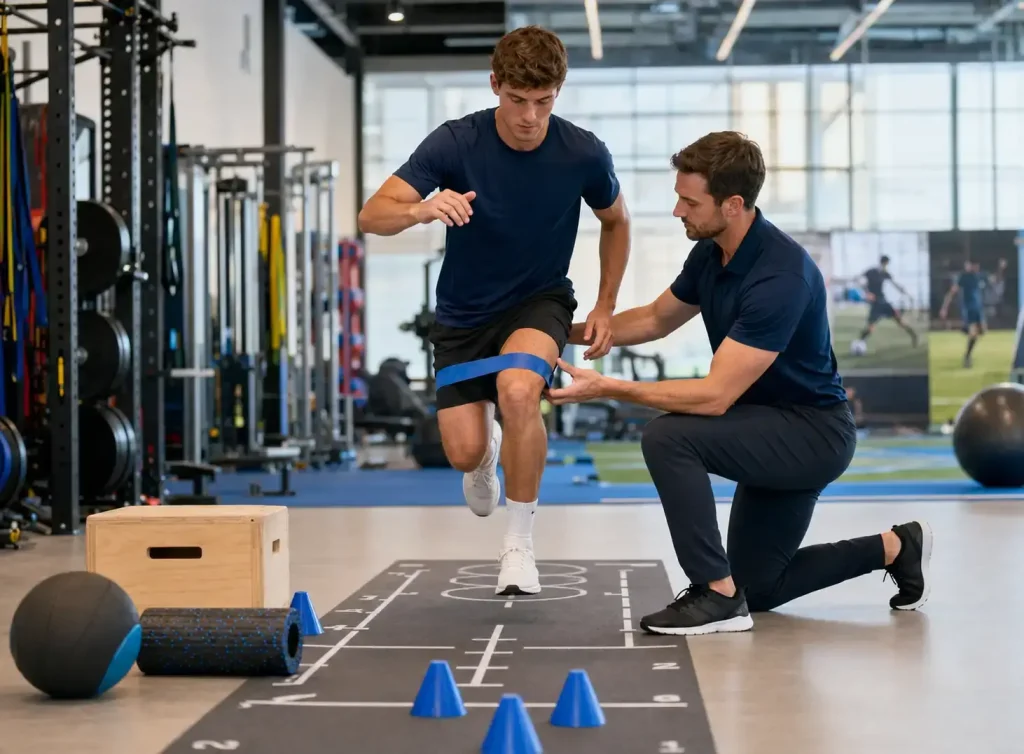
Why Athletes in Langley Choose Divine Care
- Hands-on manual therapy combined with progressive loading
- Advanced tools in-house, including IMS/dry needling, Class IV laser, shockwave therapy, athletic and kinesiology taping, and acupuncture
- Youth sports physiotherapy, including concussion baseline assessments
- Direct billing available with many extended health providers
- Walnut Grove location at Thunderbird Village, with easy access from 88 Ave and the Highway 1 corridor
What Is Sports Physiotherapy?
Sports physiotherapy is the branch of physiotherapy focused on injuries caused by or affecting athletic activity, with the goal of helping you safely return to the physical demands of your sport.
The clinical foundation is the same as general physiotherapy. What changes is the target. Sports physiotherapy focuses specifically on the movements, strength, control and physical demands required for athletic activity.
That difference shows up in three practical ways.
Assessment Is Sport-Specific
A goalkeeper’s shoulder, a distance runner’s knee and a hockey player’s hip all face different movements and loading demands. Assessment therefore considers not only the injured area but also the movements your sport requires.
Rehabilitation Is Progressively Loaded
Tissues are challenged gradually as recovery progresses. Strength, movement and exercise demands are increased according to how your body responds.
Return-to-Sport Decisions Consider Function
Returning to sport is not based on time alone. Physical function, movement quality, strength, control and the demands of your activity all need to be considered.

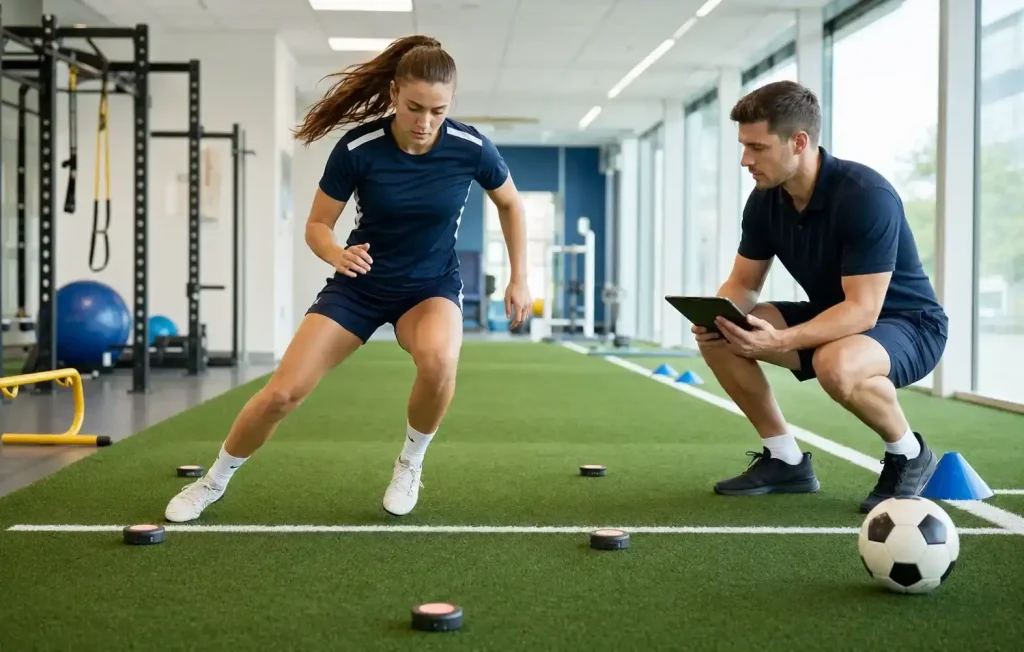
Who We Treat
You do not need to be a competitive athlete to benefit from sports physiotherapy.
We treat:
- Recreational athletes
- Competitive athletes
- Youth and school-team athletes
- Runners
- Cyclists
- Gym-goers and active adults
- Weekend warriors returning after time off
Sports Injuries We Treat
Knee
ACL, MCL and meniscus injuries · patellofemoral pain syndrome · runner’s knee · post-ACL-reconstruction rehabilitation · IT band syndrome
Shoulder and Elbow
Rotator cuff injuries · shoulder impingement · shoulder instability and post-dislocation rehabilitation · AC joint sprains · tennis elbow · golfer’s elbow
Ankle and Foot
Ankle sprains · Achilles tendinopathy and Achilles injuries · shin splints · ankle instability
Hip, Groin and Thigh
Groin strains · hamstring strains · muscle strains
Spine and Head
Sport-related low back pain · neck pain from contact sport · whiplash injuries · concussion
Growth-Related Conditions in Youth Athletes
Osgood-Schlatter disease · Sever’s disease · overuse injuries in young athletes
Two athletes with the same diagnosis rarely need exactly the same programme.
A hamstring strain in a sprinter and a hamstring strain in a soccer midfielder involve different mechanisms, loading demands and return criteria. That is why every rehabilitation plan is built around the individual athlete, their injury and the activity they want to return to.
Stage 4 — Sport-Specific Loading
As recovery progresses, rehabilitation begins to reflect the actual demands of your sport.
This may include:
- Change of direction
- Jumping and landing mechanics
- Acceleration and deceleration
- Overhead movement patterns
- Throwing
- Running
- Sustained cycling positions
- Other movements specific to your sport
The aim is to gradually move from general rehabilitation toward the physical demands you will encounter during training and competition.
Stage 5 — Return to Sport
We plan a graded return to training based on your progress, physical function and the demands of your activity.
Returning to sport is more than becoming pain-free. The aim is to rebuild the movement, strength and physical capacity required for your activity before progressively increasing training demands.
Our Return-to-Sport Process
Stage 1 — Assessment and Diagnosis
Your first visit covers how the injury happened, your training history and volume, the demands of your sport, and your recovery goals.
We then assess movement, strength, joint mechanics and control before explaining what we found and what may be contributing to the problem.
You leave the first appointment with an explanation of the assessment findings and a recommended treatment plan.
Stage 2 — Settling Pain and Protecting the Tissue
Early treatment may include manual therapy, IMS or dry needling, taping, laser or shockwave therapy, and activity modification where appropriate.
The aim during this stage is to manage symptoms while preparing the injured area for gradual movement and loading.
Stage 3 — Restoring Movement and Strength
This is where recovery is progressively built.
Range of motion, strength, stability and motor control are restored through appropriate exercises, with the load increased as your body tolerates it.
Treatment Techniques Available at Our Langley Clinic
Depending on your injury and stage of recovery, treatment may include:
- Manual therapy — joint mobilisation and soft tissue techniques, including Maitland and Mulligan approaches
- Intramuscular Stimulation (IMS) and dry needling for persistent muscle tightness and trigger points
- Shockwave therapy for certain tendon problems
- Class IV laser therapy
- Athletic taping and kinesiology taping for support during return to activity
- Acupuncture
- Exercise prescription
- Kinesiology and active rehabilitation
- Concussion management and vestibular rehabilitation
Techniques are selected according to your specific injury, assessment findings and stage of recovery.
Exercise progression plays an important role in rebuilding long-term capacity, while hands-on treatments and other modalities may be used where appropriate to support that progression.

Concussion and Head Injury in Sport
A concussion is a brain injury and should be assessed appropriately.
Symptoms may not always appear immediately after an impact. Headache, dizziness, difficulty concentrating, sensitivity to light or noise, sleep disturbance, balance problems and mood changes may appear or worsen over the hours or days following an injury.
Return to sport following a concussion should follow an appropriate assessment and graduated process.
We also work alongside your physician when medical assessment is required and will recommend further medical evaluation when appropriate.
If you have had a head injury and develop worsening headache, repeated vomiting, seizure, weakness or numbness, slurred speech, increasing drowsiness or confusion, seek emergency medical care immediately rather than booking physiotherapy.
Youth Sports Physiotherapy
Young athletes are not simply smaller versions of adult athletes. Their bodies are still developing, and that needs to be considered when assessing injuries and planning rehabilitation.
During growth spurts, changes in the growing body can affect movement and increase stress around developing areas.
Conditions such as Osgood-Schlatter disease and Sever’s disease primarily affect children and adolescents. Repetitive sports participation may also contribute to overuse injuries in young athletes.
We assess young athletes with their:
- Growth stage
- Activity level
- Training demands
- Sport requirements
- Symptoms
- Individual goals in mind.
We also perform concussion baseline assessments, which coaches and teams sometimes request before a season. A baseline assessment provides pre-season information that may be considered alongside symptoms and clinical assessment following a suspected concussion.
Parents are welcome in the treatment room, and we explain the rehabilitation plan to both the young athlete and the adult.
Sports Physiotherapy After Surgery
Some sports injuries require surgical treatment before an athlete can begin the full return-to-sport process.
ACL reconstruction is a common example, particularly in sports involving jumping, pivoting, cutting or sudden changes in direction. Shoulder, knee and other orthopaedic procedures may also require structured rehabilitation before normal training can resume.
When appropriate, post-surgical physiotherapy helps rebuild movement, flexibility, strength and physical function while following the surgeon’s instructions and available rehabilitation protocol.
As recovery progresses, rehabilitation can gradually transition from basic post-operative goals toward the movements and loading demands required for sport.
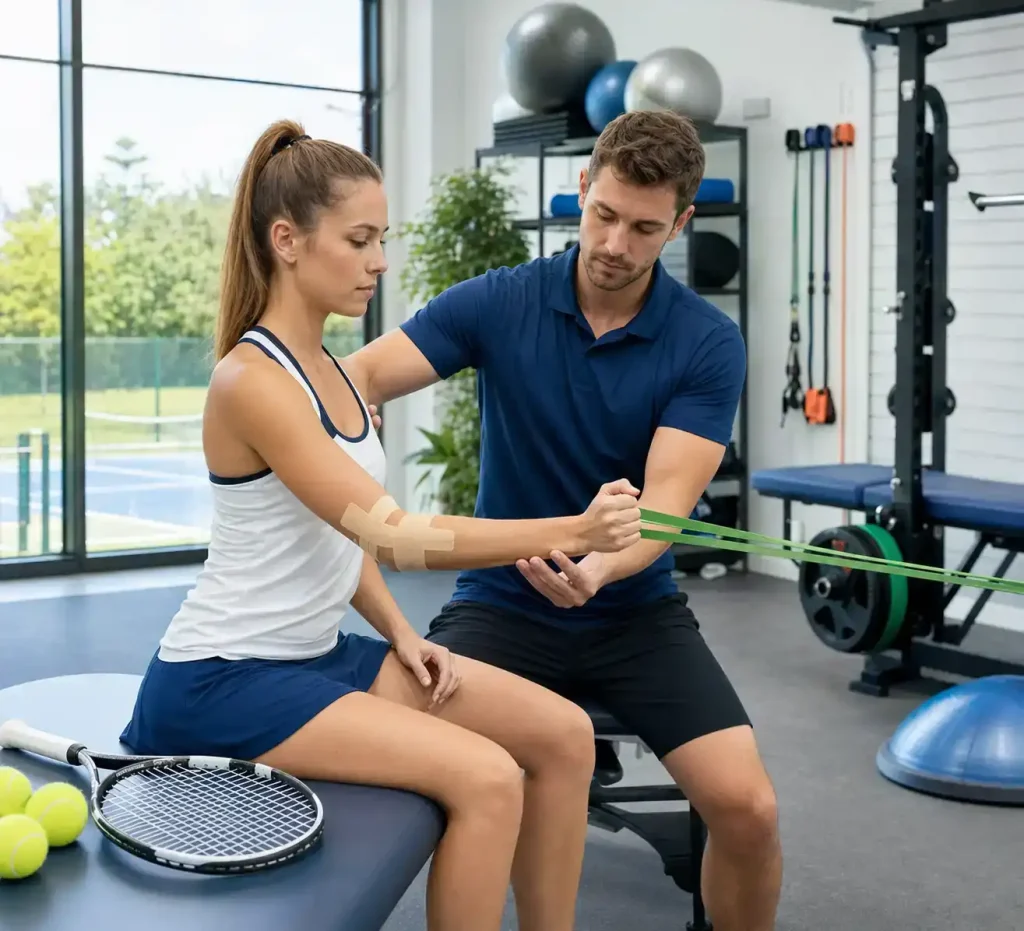

What to Expect at Your First Appointment
Wear comfortable clothing that allows you to move easily. Shorts are useful when the injury involves the knee, hip, ankle or lower leg.
Bring your insurance details and any relevant imaging reports, surgeon’s notes or medical information if available.
Your appointment may include:
- A detailed history of the injury
- Discussion of your sport and training
- Physical and movement assessment
- A clear explanation of the assessment findings
- Hands-on treatment where appropriate
- Initial exercises
- Activity guidance
- A recommended treatment plan
You will leave with an understanding of the assessment findings, your treatment plan and guidance for the period before your next appointment.
Areas We Serve
Our clinic is located in Thunderbird Village in Walnut Grove, and we see athletes and active individuals from across the Township and City of Langley and neighbouring communities.
Walnut Grove · Willoughby · Willowbrook · Fort Langley · Langley City · Brookswood · Murrayville · Aldergrove · Clayton Heights · Cloverdale · North Surrey
Frequently Asked Questions
Do I need a doctor's referral for sports physiotherapy?
No. You can book directly with a physiotherapist in British Columbia. Some extended health plans may require a referral for reimbursement, so check the requirements of your own plan.
If your physiotherapist identifies something that requires a physician’s opinion, they can recommend medical assessment.
How is sports physiotherapy different from regular physiotherapy?
The clinical foundation is the same, but sports physiotherapy places additional focus on the movements, physical capacity and activity demands connected with sport.
Assessment and rehabilitation are therefore designed around both the injury and the activity the athlete wants to return to.
How many sessions will I need?
The number of sessions depends on factors such as the type of injury, its severity, how long you have had the problem and the activity you want to return to.
A mild ankle sprain and rehabilitation following ACL reconstruction, for example, require very different recovery plans.
After your first assessment, your physiotherapist can explain the recommended treatment plan.
How soon after an injury should I come in?
An assessment can help identify the nature of the problem, guide activity modification and determine whether physiotherapy or further medical assessment may be appropriate.
Can I keep training while I am injured?
That depends on the injury and the type of activity involved.
In some situations, training can continue with modifications. In others, certain activities may need to be reduced or temporarily stopped.
Your physiotherapist can help determine what level of activity is appropriate and how it can be gradually progressed.
Do you treat young athletes?
Yes.
We treat youth and school-team athletes, including athletes with growth-related conditions such as Osgood-Schlatter disease and Sever’s disease, as well as overuse and sports-related injuries.
Do you do concussion baseline testing?
Yes.
We perform concussion baseline assessments, which coaches or teams sometimes request before a sports season.
Do you direct bill my insurance?
We direct bill many major extended health providers. Contact us with your plan details if you would like to confirm your coverage before your first visit.
What should I wear?
Wear comfortable clothing that allows you to move.
Shorts are helpful for knee, hip and ankle assessments. A loose t-shirt or tank top may be useful for shoulder-related problems.
Do you help with recurring problems, not just new injuries?
Yes.
Sports physiotherapy can assess recurring symptoms, movement limitations, strength deficits and activity-related concerns, as well as new injuries.
The assessment can help identify factors that may be contributing to repeated symptoms during sport or training.
What if my injury needs surgery?
Physiotherapy may be provided before or after surgery when appropriate.
Post-surgical rehabilitation follows the surgeon’s instructions, available medical notes and relevant rehabilitation guidelines before gradually progressing toward normal activity and, where appropriate, return to sport.
Book Your Sports Physiotherapy Appointment in Langley
Whether you are dealing with a fresh sprain, a tendon problem that has continued for months, a young athlete with persistent knee pain, or a return to sport that has stalled, an assessment can help determine what is happening and how your rehabilitation should progress.