
TMJ Dysfunction Management (Temporomandibular Joint Dysfunction Management)
Jaw pain, clicking, locking, headaches, and discomfort while chewing can gradually affect everyday activities such as eating, speaking, and even sleeping.
At Divine Care Physiotherapy in Langley, our registered physiotherapists assess the factors contributing to your symptoms and develop an individualized treatment plan focused on improving jaw movement, reducing pain, and restoring function.
Because TMJ dysfunction often involves the muscles, joints, and movement patterns of the jaw and neck, treatment may incorporate approaches commonly used in Manual Physiotherapy and other musculoskeletal rehabilitation services when appropriate.
What Is the Temporomandibular Joint (TMJ)?
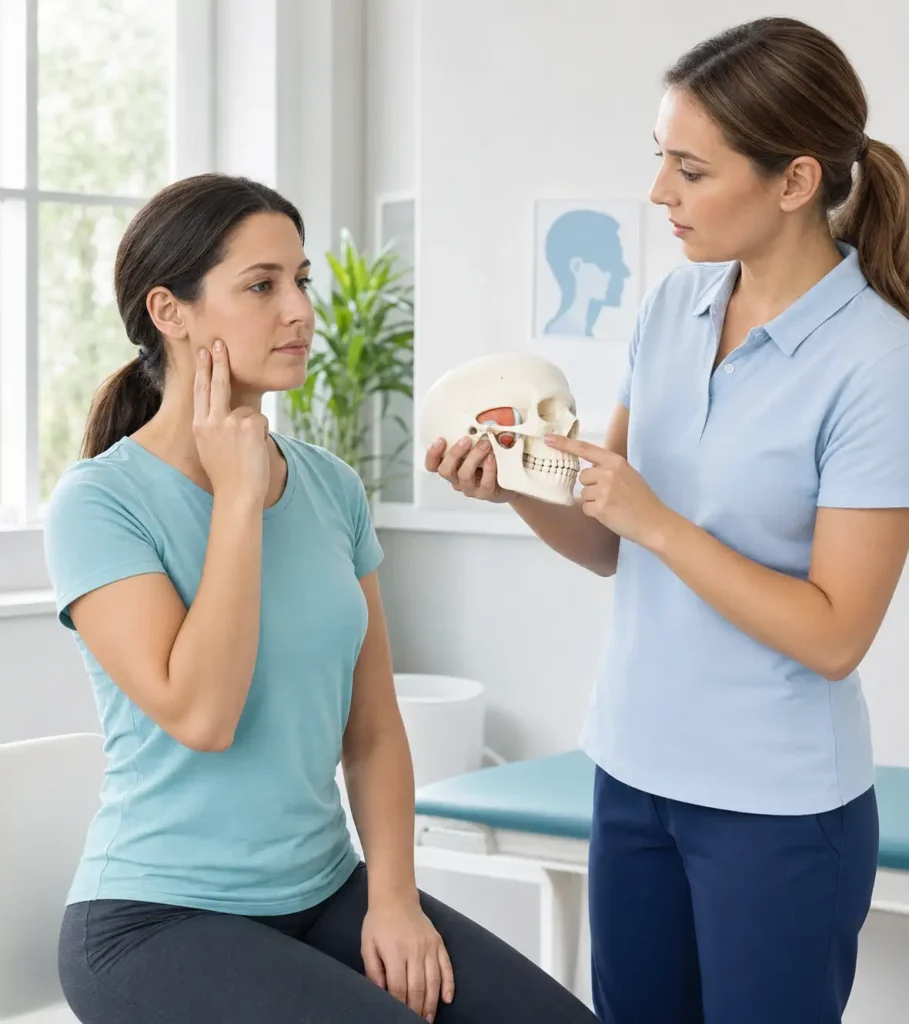
The temporomandibular joints (TMJs) connect your lower jaw (mandible) to your skull.
You have one TMJ on each side of your jaw, and these joints are involved in:
- Chewing
- Speaking
- Swallowing
- Yawning
- Facial expressions
The TMJ is one of the most frequently used joints in the body.
When the joint, surrounding muscles, joint disc, or associated movement patterns stop functioning efficiently, symptoms may develop. This condition is commonly referred to as temporomandibular dysfunction (TMD) or TMJ dysfunction.
Although TMJ dysfunction is generally not dangerous, it can significantly affect comfort, eating, communication, and overall quality of life. The good news is that many people experience improvement through conservative treatment approaches such as physiotherapy, often without requiring surgery or long-term medication.

Signs and Symptoms of TMJ Dysfunction
TMJ dysfunction can present differently from one person to another. Some individuals experience a single symptom, while others experience a combination of jaw, facial, head, and neck-related symptoms. Common signs and symptoms include:
Jaw and Facial Pain
Pain may be felt around:
- The jaw joint
- The cheek muscles
- The temples
- The side of the face
Symptoms often increase during chewing, speaking, yawning, or prolonged jaw activity.
Clicking and Popping
Some individuals notice:
- Clicking sounds
- Popping sensations
- Joint noises during opening or closing
These sounds may occur due to changes in joint mechanics or movement of the joint disc.
Jaw Locking or Limited Mouth Opening
TMJ dysfunction may contribute to:
- Difficulty opening the mouth fully
- Jaw stiffness
- Locking episodes
- Restricted movement
These symptoms can interfere with eating, dental care, and daily activities.
Headaches
Jaw muscle tension and altered jaw mechanics may contribute to headaches felt around:
- The temples
- Forehead
- Side of the head
Some individuals mistake these symptoms for tension-type headaches because of their similar presentation.
Ear Symptoms
TMJ dysfunction may sometimes be associated with:
- Ear discomfort
- Ear fullness
- Ringing in the ears (tinnitus)
- Pressure around the ear
Because the jaw joint is located close to the ear, symptoms can occasionally be felt in this region even when the ear itself is not the source of the problem.
Pain While Chewing
Some people experience:
- Pain during eating
- Fatigue while chewing
- Difficulty eating tougher foods
- Increased discomfort during long conversations
These symptoms may affect daily activities and overall quality of life.
What Causes TMJ Dysfunction?
TMJ dysfunction rarely develops because of a single factor.
More commonly, symptoms arise from a combination of joint, muscular, movement, and lifestyle-related influences.
Potential contributing factors include:
- Bruxism (teeth grinding or clenching)
- Stress-related muscle tension
- Whiplash injuries
- Jaw trauma
- Facial injuries
- Poor posture
- Forward head posture
- Joint disc displacement
- Arthritis or degenerative changes
- Prolonged mouth opening during dental procedures
- Frequent gum chewing
- Nail biting
- Repetitive jaw loading habits
A detailed physiotherapy assessment helps identify which factors may be contributing to your symptoms.

Why We Assess Your Neck, Not Just Your Jaw
The jaw and upper cervical spine share important muscular, neurological, and biomechanical connections.
Changes in posture, cervical mobility, or muscle tension can influence how forces are distributed through the jaw during daily activities.
- Jaw movement
- Cervical spine mobility
- Posture
- Muscle function
- Movement patterns
How We Treat TMJ Dysfunction
There is no single treatment approach that works for every individual. Your physiotherapist will develop a treatment plan based on your symptoms, assessment findings, functional limitations, and recovery goals.
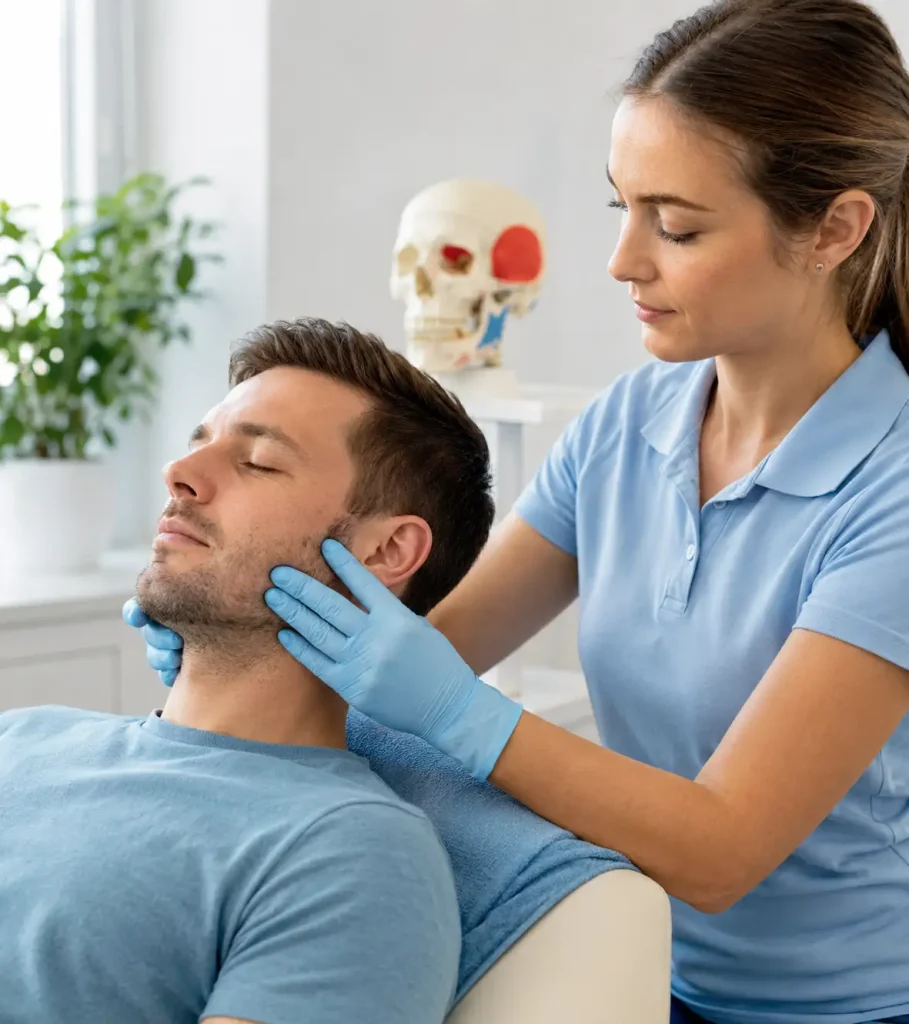
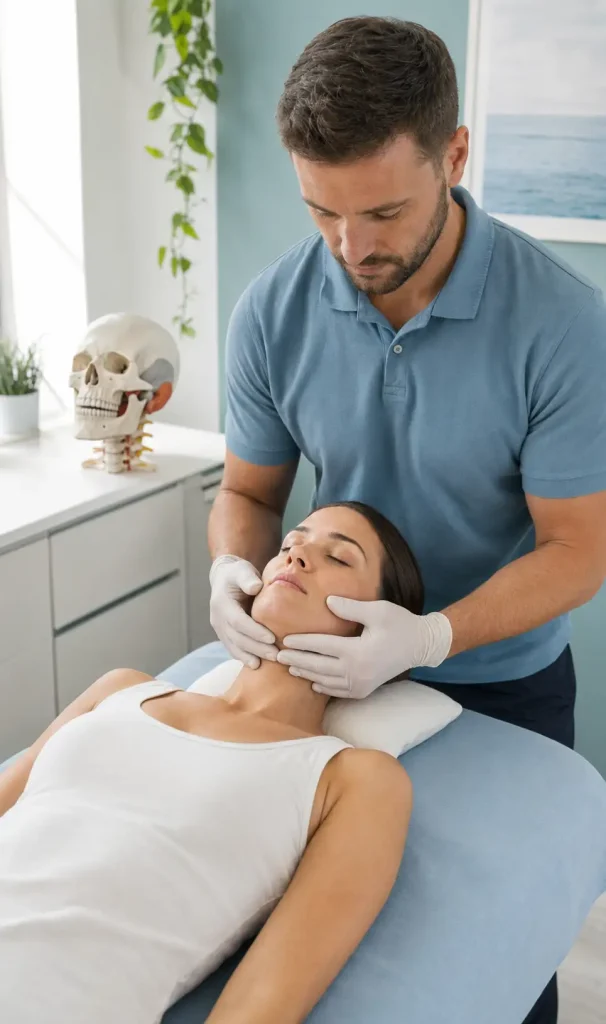
Manual Therapy and Joint Mobilization
Hands-on treatment may be used to address:
- Jaw joint mobility
- Muscle tension
- Soft tissue restrictions
- Cervical spine stiffness
Because TMJ dysfunction often involves the jaw and neck together, treatment may incorporate techniques commonly used in Manual Physiotherapy to help improve movement quality and reduce discomfort.
IMS / Dry Needling
Muscle tension is a common contributing factor in many TMJ presentations.
Some individuals develop tightness and trigger points in muscles such as:
- Masseter
- Temporalis
- Sternocleidomastoid (SCM)
- Upper trapezius
- Deep neck muscles
Where clinically appropriate and within the physiotherapist’s scope of practice, IMS / Dry Needling may be considered as part of a broader treatment plan to address muscular tension and movement limitations contributing to jaw discomfort.
Because needling is not appropriate for every patient, your physiotherapist will determine whether this approach is suitable following a thorough assessment.
Jaw and Postural Exercises
Exercise therapy is often an important component of TMJ rehabilitation.
Depending on your assessment findings, your program may include exercises designed to:
- Improve jaw control
- Improve jaw opening mechanics
- Reduce muscle tension
- Improve movement coordination
- Address postural contributors
- Improve neck mobility and stability
Exercises are individualized and progressed according to your symptoms, goals, and response to treatment.
Class IV Laser Therapy
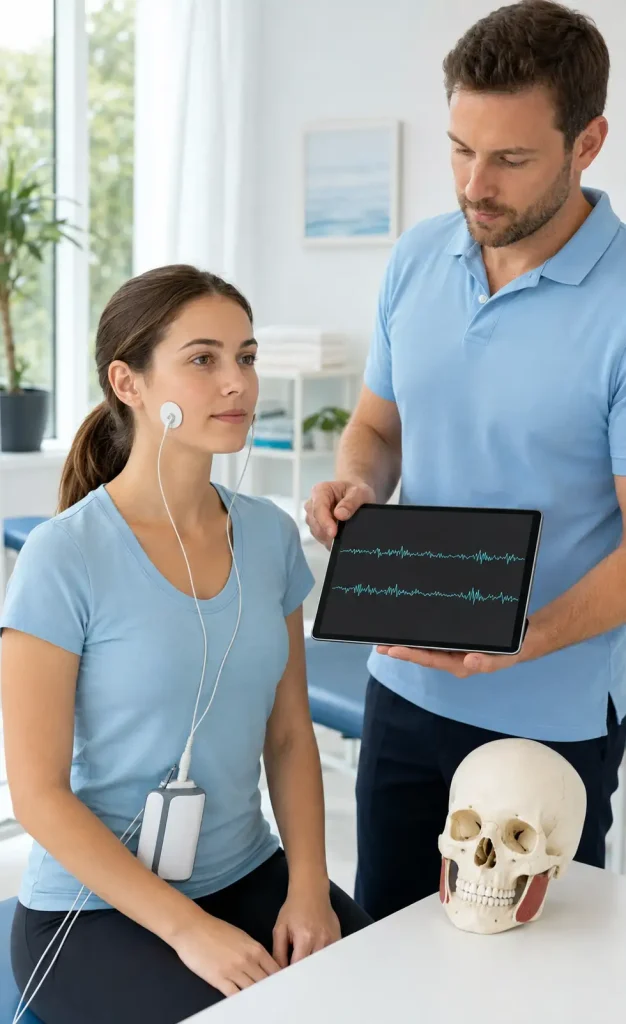
Class IV Laser Therapy is one of the treatment services offered at Divine Care Physiotherapy.
Where clinically appropriate, laser therapy may be considered as part of an individualized treatment program for pain management and rehabilitation.
Whether laser therapy is appropriate for TMJ-related symptoms depends on:
- Your condition
- Assessment findings
- Rehabilitation goals
Your physiotherapist will determine whether this treatment may be beneficial as part of your overall care plan.
Education and Self-Management
Education plays an important role in long-term symptom management.
Your physiotherapist may provide guidance regarding:
- Jaw habits
- Clenching awareness
- Activity modification
- Posture
- Stress-related jaw tension
- Home exercises
- Symptom management strategies
The goal is to help you understand factors that may be contributing to your symptoms and provide practical strategies to support recovery between appointments.
Should I See a Physiotherapist or a Dentist for TMJ?
In many cases, both healthcare professionals can play an important role.
Dentists May Help With:
- Bite-related concerns
- Tooth wear
- Bruxism management
- Night guards and splints
- Dental conditions affecting the jaw
Physiotherapists May Help With:
- Jaw joint mobility
- Muscle tension
- Movement impairments
- Postural factors
- Neck-related contributors
- Functional rehabilitation
Because TMJ dysfunction is often influenced by musculoskeletal factors involving the jaw, neck, and surrounding muscles, physiotherapy can be an important part of conservative, non-invasive care.
When appropriate, physiotherapy and dental treatment may work together to support recovery. If your physiotherapist identifies concerns that require dental or medical assessment, appropriate follow-up recommendations will be provided.
Jaw Pain After a Car Accident
Jaw symptoms sometimes develop following:
- Motor vehicle accidents
- Whiplash injuries
- Direct trauma to the face or jaw
- Head injuries
The forces involved in a collision can affect both the jaw and the cervical spine, even when symptoms are not immediately obvious.
Some individuals develop:
- Jaw pain
- Clicking
- Limited mouth opening
- Headaches
- Neck pain
following an accident.
Because whiplash injuries can affect both the neck and jaw, assessment may consider how cervical spine dysfunction is contributing to ongoing symptoms.
If your jaw symptoms developed after a motor vehicle accident, a physiotherapy assessment can help determine whether rehabilitation may be appropriate.
What to Expect at Your First Visit
Comprehensive Assessment
Your physiotherapist will begin by discussing:
- Your symptoms
- Medical history
- Jaw pain history
- Previous injuries
- Contributing factors
- Functional limitations
The assessment may include evaluation of:
- Jaw opening
- Jaw movement patterns
- Joint sounds
- Muscle tenderness
- Neck mobility
- Posture
- Cervical spine function
This helps identify the factors contributing to your symptoms and guides treatment planning.
Explanation and Treatment Plan
After your assessment, your physiotherapist will explain:
- Assessment findings
- Potential contributing factors
- Treatment recommendations
- Expected rehabilitation goals
You will have an opportunity to ask questions and discuss concerns before treatment begins.
Treatment and Home Exercises
Depending on your condition and assessment findings, treatment may begin during your first visit.
You may also receive:
- Home exercises
- Self-management strategies
- Activity recommendations
- Postural guidance
to help support progress between appointments.
Progress and Prevention
As treatment progresses, your physiotherapist may:
- Reassess symptoms
- Monitor jaw function
- Adjust treatment strategies
- Progress exercises
- Address recurring contributing factors
The goal is not only to improve current symptoms but also to help reduce the likelihood of recurrence where possible.
Why Choose Divine Care Physiotherapy?
Jaw pain and TMJ dysfunction can be frustrating because symptoms often involve more than just the jaw itself.
At Divine Care Physiotherapy, our registered physiotherapists assess the broader factors that may be contributing to your symptoms, including:
- Jaw mechanics
- Muscle tension
- Cervical spine function
- Posture
- Movement patterns
Our approach focuses on individualized assessment and treatment planning rather than applying the same treatment strategy to every patient.
Treatment recommendations may incorporate approaches commonly used in:
- Manual Physiotherapy
- Musculoskeletal Physiotherapy
- IMS / Dry Needling
- Class IV Laser Therapy
when clinically appropriate and supported by assessment findings.
We also believe in helping patients understand their condition through education, clear communication, and practical self-management strategies.
If collaboration with your dentist, physician, or another healthcare professional may be beneficial, we will recommend appropriate follow-up care.
Can Physiotherapy Help TMJ and Jaw Pain?
Yes.
Physiotherapy may help address musculoskeletal contributors to TMJ dysfunction, including:
- Joint stiffness
- Muscle tension
- Movement impairments
- Postural factors
- Neck-related contributors
Treatment is generally focused on improving function, reducing discomfort, and addressing factors contributing to symptoms.
Do I Need a Doctor's or Dentist's Referral?
No.
A referral is generally not required to see a physiotherapist at Divine Care Physiotherapy.
If your assessment identifies concerns requiring dental or medical evaluation, appropriate follow-up recommendations will be provided.
How Many Sessions Will I Need?
The number of treatment sessions varies between individuals.
Factors influencing recovery may include:
- Duration of symptoms
- Severity of symptoms
- Contributing factors
- Treatment response
- Home exercise compliance
After your assessment, your physiotherapist can provide a more individualized estimate based on your condition.
Why Does My Jaw Problem Cause Headaches or Ear Symptoms?
The jaw joint and surrounding muscles are closely connected to structures around the head and ears.
As a result, TMJ dysfunction may sometimes be associated with:
- Headaches
- Ear discomfort
- Ear fullness
- Tinnitus-like symptoms
This is one reason why your physiotherapist may assess both the jaw and neck during your evaluation.
Should I See a Physiotherapist or a Dentist?
Both may play important roles depending on the source of your symptoms.
Dentists address:
- Dental factors
- Bite-related concerns
- Night guards
- Tooth wear
Physiotherapists address:
- Jaw movement
- Joint mechanics
- Muscle tension
- Neck involvement
- Postural contributors
When appropriate, both approaches can work together.
Is TMJ Treatment Painful?
Treatment is always adapted to your comfort level.
Some techniques or exercises may produce mild temporary discomfort, but your physiotherapist will adjust treatment based on your symptoms and tolerance.
Frequently Asked Questions
Ready to Move Your Jaw More Comfortably?
Book Your Shockwave Therapy Assessment Today