
Acupuncture Treatment in Langley
Individualized acupuncture care for pain management, muscle tension, headaches and rehabilitation, provided within a broader physiotherapy and movement-focused clinical setting.
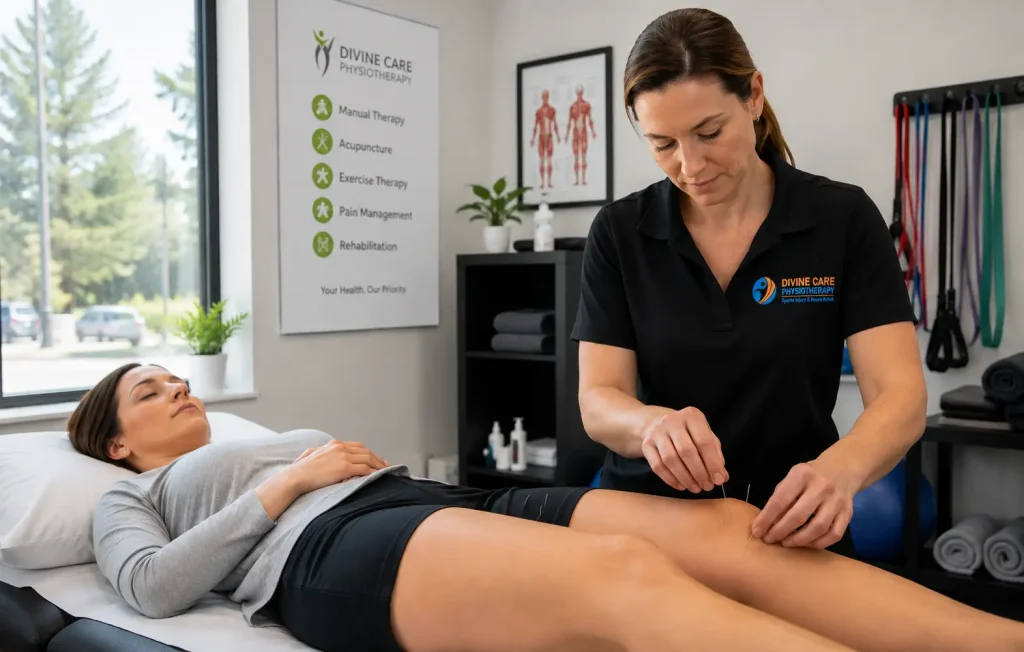
Acupuncture Treatment With an Individualized Plan
Acupuncture involves the insertion of very fine, sterile needles into selected points on the body. It originated within Traditional Chinese Medicine (TCM) and is now also used in a variety of contemporary healthcare and rehabilitation settings.
At Divine Care Physiotherapy in Langley, acupuncture is offered as part of an individualized treatment approach. Depending on your presentation, it may be used alongside physiotherapy, rehabilitation and movement-based care.
Modern research continues to investigate how acupuncture may influence pain processing, sensory nerve activity, nervous-system responses and other physiological processes. Individual responses vary, and acupuncture is not considered a cure for every condition.
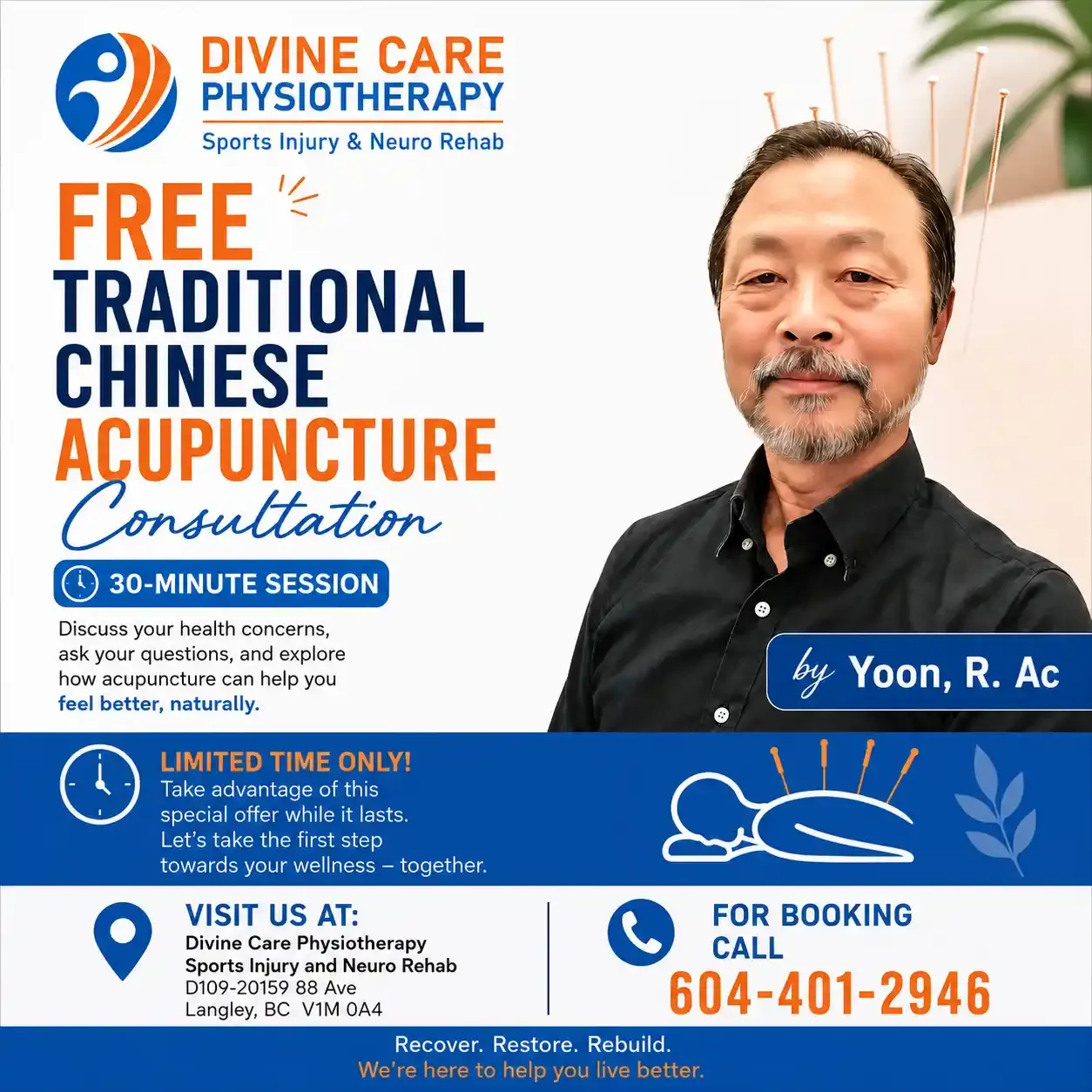
Meet Yoon Bae Bang, Registered Acupuncturist
Acupuncture at Divine Care Physiotherapy is provided by Yoon Bae Bang, a Registered Acupuncturist registered with the College of Complementary Health Professionals of BC (CCHPBC), according to the clinic's current service information.
Yoon's professional profile describes an approach that brings Traditional Chinese Medicine acupuncture into a broader rehabilitation environment, allowing acupuncture care to sit alongside physiotherapy services when appropriate.
Learn About the Provider →What Can Acupuncture Treatment Help With?
Acupuncture recommendations depend on the individual's symptoms, medical history, assessment findings and treatment goals. It may be considered as one component of a broader care plan.
Neck & Back Pain
May be considered for pain and muscular tension affecting the neck, upper back or lower back.
Shoulder & Joint Pain
May be incorporated into care for selected musculoskeletal pain and movement-related concerns.
Headaches & Migraines
May be considered for tension-type, cervicogenic and migraine-related symptoms depending on the assessment.
Muscle Tension
May be used where muscular tightness or tension is relevant to the person's symptoms.
Sports Injuries
May complement sports rehabilitation when the goal is to restore movement and return to physical activity.
Stress & Sleep Support
Some people seek acupuncture as part of a wellness-focused approach to relaxation, stress and sleep concerns.
Acupuncture for Headache-Related Symptoms
Acupuncture may be considered for people experiencing tension-type headaches, cervicogenic headaches or migraine-related symptoms. Your provider will consider the pattern of your symptoms and overall health history before recommending treatment.
When headaches are associated with neck stiffness, shoulder tension or musculoskeletal factors, acupuncture may be combined with physiotherapy approaches that address movement and function.
Divine Care also provides a dedicated Acupuncture for Migraines & Headaches in Langley page for more specific information.
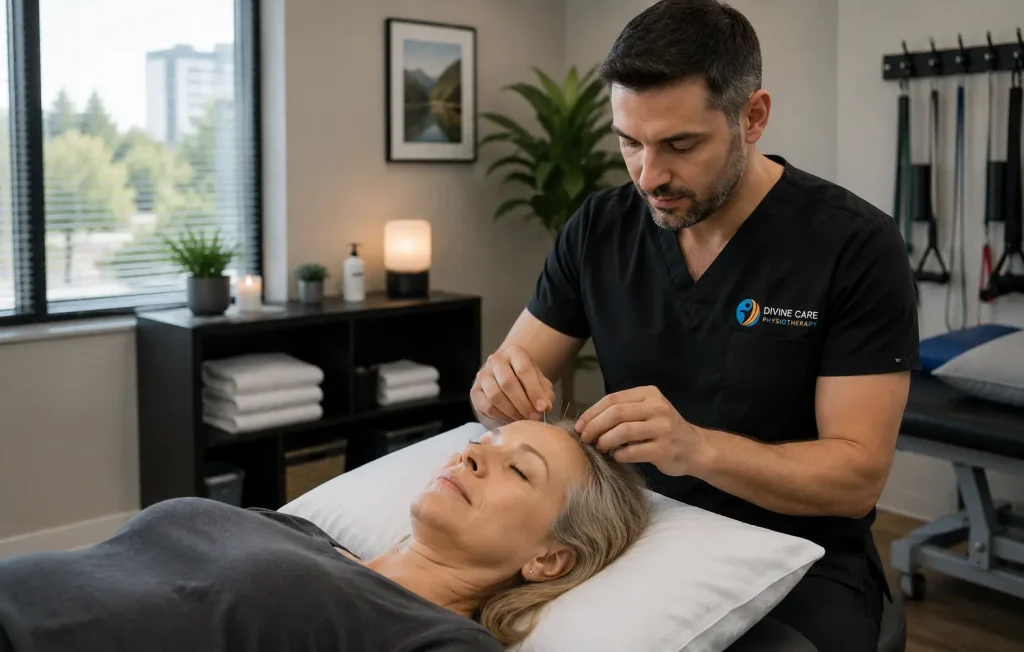
Acupuncture Within a Broader Rehabilitation Plan
Acupuncture does not have to be a stand-alone treatment. Where clinically appropriate, it may be incorporated with movement, exercise and physiotherapy-based care.
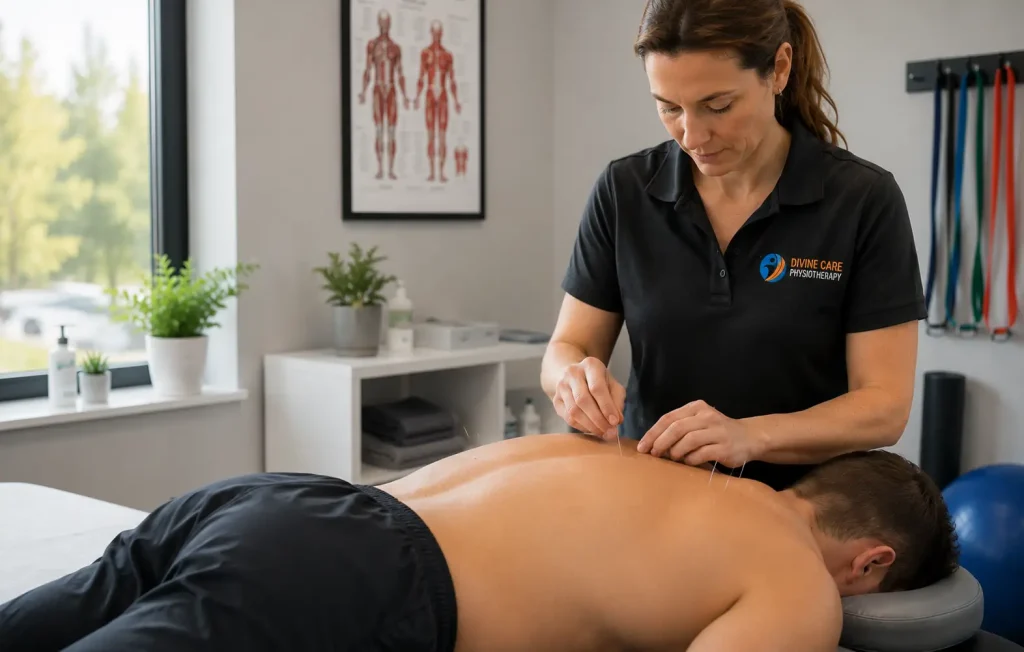
They Use Fine Needles, But They Are Not the Same Treatment
Acupuncture is rooted in Traditional Chinese Medicine and uses selected acupuncture points according to the individual's symptoms, presentation and treatment goals.
IMS / Dry Needling is based on Western medical principles and is used within physiotherapy to address issues such as muscle trigger points, tightness, neuromuscular dysfunction and movement impairments.
Divine Care provides both services, but they have different clinical approaches. If you are unsure which service is appropriate, the provider can discuss the options with you.
A Calm, Assessment-Led Acupuncture Session
Your first session begins with a discussion about your health history, current symptoms, functional limitations, treatment goals and previous treatments.
Very fine, sterile, single-use needles are then placed at selected acupuncture points based on the treatment plan. Most people report little or no pain during insertion, although sensations such as tingling, warmth, heaviness or pressure can occur.
After needle placement, you can rest comfortably while the treatment takes place. Your provider will then discuss follow-up recommendations, home care and next steps according to your response.
Book Your Acupuncture Assessment →
What Happens During Your Acupuncture Appointment?
Health History
Discuss symptoms, medical history, medications, relevant conditions and treatment goals.
Assessment
Your provider determines whether acupuncture is appropriate and identifies the areas and points relevant to your plan.
Needle Placement
Fine sterile single-use needles are inserted into selected points according to the individualized treatment plan.
Follow-Up
Your response is reviewed and recommendations for future sessions or complementary care are discussed.
Is Acupuncture Treatment Safe?
When performed by a properly trained healthcare professional using sterile, single-use needles, acupuncture is generally considered safe for most people. As with any healthcare treatment, side effects and risks are possible.
Possible Temporary Effects
Mild soreness, small bruising, tenderness at needle sites, temporary fatigue or lightheadedness can occur.
Tell Your Provider
Discuss pregnancy, bleeding disorders, blood-thinning medications, significant medical conditions and recent procedures.
Individual Assessment
Your health history and current situation help determine whether acupuncture is suitable for you.

Acupuncture Treatment in Langley, BC
Divine Care Physiotherapy is located in Thunderbird Village at D109 – 20159 88 Ave, Langley, BC V1M 0A4.
The clinic brings acupuncture together with physiotherapy and rehabilitation services, making it possible to discuss complementary approaches when more than one aspect of recovery needs attention.
For coverage questions, the clinic's current fee information states that approved ICBC claims may cover acupuncture with no patient fee. Extended health coverage varies by plan, so confirm your current benefits with your insurer and clinic.
View Fees & Coverage →Acupuncture Treatment Questions
Does acupuncture treatment hurt?
Most people experience little discomfort during needle insertion because acupuncture needles are very fine. Some people notice mild tingling, warmth, pressure or a dull ache around a needle site. Sensations vary between individuals.
How many acupuncture sessions will I need?
There is no fixed number of sessions for everyone. Recommendations depend on the condition being treated, symptom severity and duration, treatment goals and your individual response. Your provider can discuss a plan after assessment.
Can acupuncture be combined with physiotherapy?
Yes. Depending on your condition, acupuncture may be incorporated with physiotherapy, exercise therapy, rehabilitation, movement retraining or other appropriate services.
What is the difference between acupuncture and dry needling?
Acupuncture is rooted in Traditional Chinese Medicine and uses selected acupuncture points. IMS / Dry Needling is a physiotherapy approach based on Western medical principles and commonly targets muscular trigger points, tightness and neuromuscular dysfunction.
Is acupuncture covered by insurance in BC?
Coverage depends on your extended health plan and eligibility requirements. The clinic advises patients to verify their benefits directly with their insurer. Approved ICBC claims may have different coverage arrangements.
Is acupuncture available at Divine Care Physiotherapy in Langley?
Yes. Acupuncture is listed as a service at Divine Care Physiotherapy in Thunderbird Village, Langley, and is provided as part of an individualized treatment approach.
Can acupuncture help with headaches or migraines?
Acupuncture may be considered for tension-type headaches, cervicogenic headaches and migraine-related symptoms depending on the individual's symptoms and health history. Divine Care also provides a dedicated acupuncture-for-migraines service page.
Who provides acupuncture at Divine Care Physiotherapy?
The clinic's current acupuncture service information identifies Yoon Bae Bang as a Registered Acupuncturist registered with the College of Complementary Health Professionals of BC (CCHPBC).
Ready to Explore Acupuncture Treatment in Langley?
Discuss your symptoms, treatment goals and health history with the acupuncture provider at Divine Care Physiotherapy to determine whether acupuncture is an appropriate part of your care plan.
Acupuncture Treatment in Langley
D109 – 20159 88 Ave (Thunderbird Village), Langley, BC V1M 0A4.