
If you have never tried acupuncture before, the idea of a treatment involving fine needles can naturally raise questions.
What actually happens during a consultation? Does it hurt? What should you tell the practitioner? And what happens after the consultation?
At Divine Care Physiotherapy in Langley, acupuncture is available as part of the clinic’s broader range of rehabilitation and wellness services. The clinic’s current service information includes physiotherapy, sports physiotherapy, manual therapy, vestibular rehabilitation, IMS, shockwave therapy, concussion management, neurological rehabilitation, kinesiology/active rehabilitation and other rehabilitation services.
If you’re considering acupuncture for the first time, understanding what to expect can make the experience much more comfortable.
Divine Care Physio is dedicated to preventive care. We offer ergonomic assessments, workplace injury prevention programs, and educational workshops to help individuals and organizations minimize the risk of injury and promote a healthier lifestyle. Our commitment to excellence extends beyond treatment, as we strive to empower our patients with the knowledge and tools needed to maintain their health and well-being.
What Is Traditional Chinese Acupuncture?
Traditional Chinese acupuncture involves the use of very fine needles placed at specific points on the body.
Acupuncture has a long history within Traditional Chinese Medicine. Modern acupuncture is also used in healthcare settings for a variety of pain-related conditions and other concerns. However, the evidence for acupuncture varies depending on the condition being treated, so it is important to avoid thinking of it as a universal treatment or guaranteed solution.
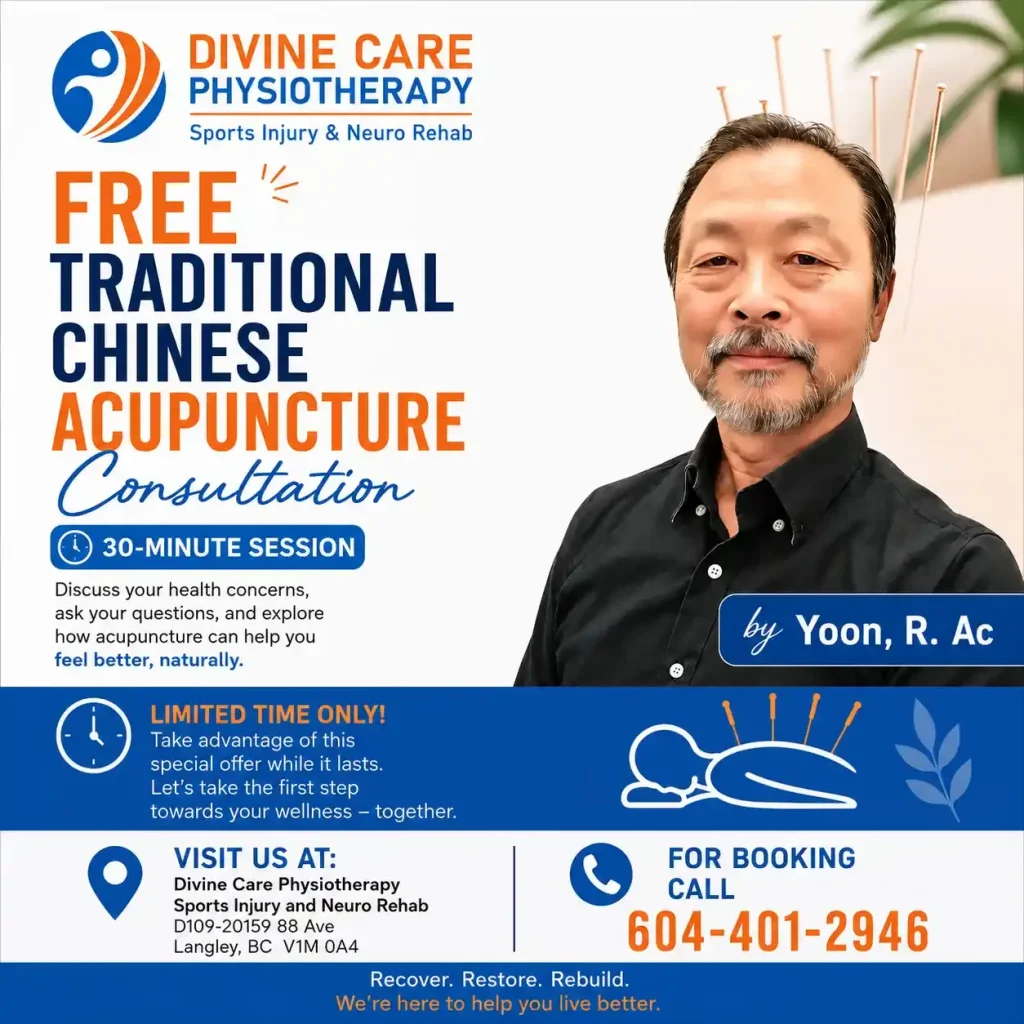
The poster for Divine Care specifically presents the service as a Traditional Chinese Acupuncture Consultation, with the consultation positioned as an opportunity to discuss health concerns, ask questions and understand whether acupuncture may be appropriate.
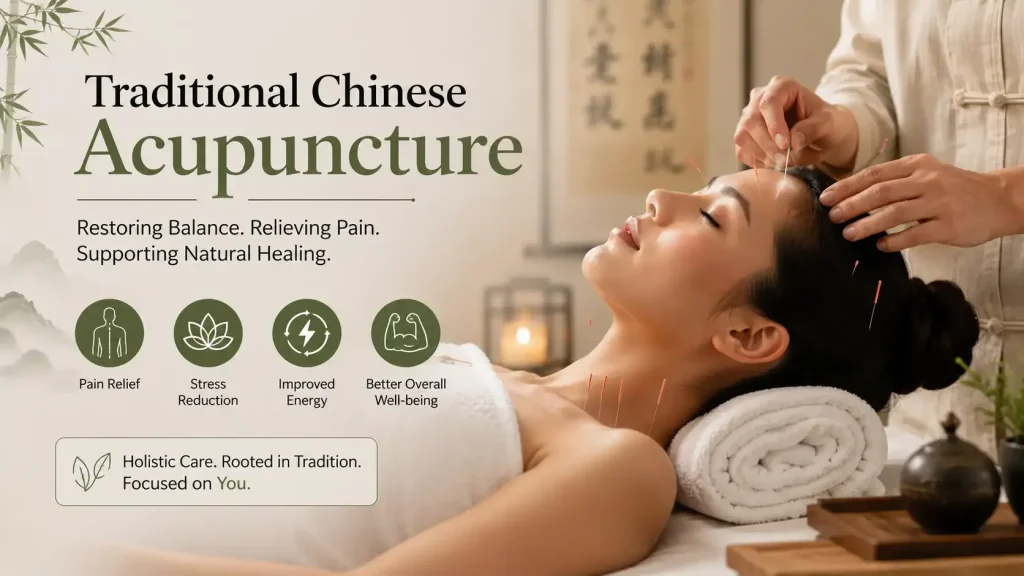
Rather than assuming that the same treatment is suitable for everyone, a practitioner needs to understand the individual’s concerns and relevant health information before determining what may be appropriate.
What Happens During Your First Acupuncture Consultation?
Your first visit should be more than simply arriving and immediately receiving acupuncture.
A consultation gives you an opportunity to explain what you are experiencing and discuss your concerns with the practitioner.
Depending on your situation, this conversation may include information such as:
- Your main health concern
- Your current symptoms
- How long the problem has been present
- Previous injuries or health conditions
- Relevant medical history
- Current medications or treatments
- Questions or concerns you have about acupuncture
Being open and accurate about your health history is important because it gives the practitioner better information to consider when deciding whether acupuncture is appropriate for you.
The exact assessment and treatment process can vary between practitioners and according to the individual’s needs.
Do You Need to Know Anything About Acupuncture Before Your Appointment?
No special knowledge is required.
If you have never experienced acupuncture before, simply tell your practitioner. You can ask questions about the procedure, where needles may be placed and what sensations you might experience.
You should also tell the practitioner about any relevant health conditions, medications, previous procedures or concerns that could affect your treatment.
One of the most useful things you can do is ask questions rather than making assumptions.
For example:
“What is the goal of acupuncture for my particular concern?”
“What should I expect during the treatment?”
“Are there any reasons acupuncture may not be appropriate for me?”
A consultation is the right time to have those conversations.
Does Acupuncture Hurt?
This is probably one of the most common questions people have before their first session.
Acupuncture uses very fine needles, and the experience can vary from person to person. Some people may experience sensations such as mild discomfort, tingling, warmth or a feeling of pressure.
It is important not to promise that acupuncture will be completely painless for everyone.
Your comfort should be communicated to the practitioner throughout the appointment. If something feels uncomfortable or concerning, let them know.
This is also consistent with the broader approach described by Divine Care for its needling-based physiotherapy services: individual responses can vary, and treatment is adjusted according to tolerance. However, IMS/dry needling is not the same treatment as Traditional Chinese Acupuncture, so the two should not be presented as interchangeable. Divine Care itself explains that dry needling evolved from traditional Chinese acupuncture but differs in technique and purpose.
What Should You Tell Your Acupuncture Practitioner?
A good consultation depends on communication.
Before treatment, tell the practitioner about relevant aspects of your health. This can include:
Your current symptoms
Explain what you’re experiencing, where it occurs and how it affects your normal activities.
Your medical history
Previous injuries, surgeries, diagnoses or other relevant health information may be important.
Your medications
Tell your practitioner about medications and other treatments you are currently receiving.
Your concerns about needles
If you are nervous about acupuncture, say so. You don’t need to hide your concerns.
Your expectations
If you’re hoping acupuncture will help with a particular problem, explain what you’re hoping to achieve. This allows the practitioner to have a clearer understanding of your goals.
What Can Acupuncture Be Used For?
Acupuncture is used for a range of health concerns, particularly pain-related conditions. Evidence does not support making the same claim for every condition, however, and acupuncture should not be presented as a guaranteed cure.
For example, Harvard Health notes that acupuncture has been used for conditions including low back pain, hand and knee pain, headaches, fibromyalgia and some types of nerve pain, while also discussing the limitations and uncertainties surrounding how acupuncture works.
Instead of assuming that acupuncture is automatically appropriate, your practitioner can discuss your individual situation and whether the treatment makes sense as part of your care.
Acupuncture vs. IMS and Dry Needling: Are They the Same?
This distinction is particularly important when considering acupuncture at a physiotherapy clinic.
Traditional Chinese Acupuncture and physiotherapy dry needling/IMS are not the same treatment.
Divine Care explains that dry needling uses acupuncture needles but differs from traditional Chinese acupuncture in both technique and purpose. Its IMS/dry needling service is directed toward specific muscles, trigger points and tight structures within a physiotherapy treatment approach.
So if you see both acupuncture and dry needling offered at a clinic, don’t assume they are simply two names for the same procedure. They have different clinical approaches and should be discussed separately with the appropriate practitioner.
What Happens After an Acupuncture Session?
Your experience following treatment can vary.
Some people may feel relaxed after acupuncture, while others may notice temporary tiredness or other short-lived sensations.
As with any healthcare treatment, you should follow the instructions provided by your practitioner and communicate any unexpected or concerning reaction.
Most importantly, don’t judge the success of a treatment solely by how you feel immediately afterward.
Your overall response, symptoms, functional goals and progress over time are more meaningful considerations.
Is Acupuncture Right for Everyone?
Not necessarily.
Although acupuncture is commonly used in healthcare, it is not automatically appropriate for every person or every health concern.
Your practitioner should consider your individual circumstances before treatment. This is another reason why the consultation matters.
If acupuncture is not appropriate for your particular situation, the right approach may be to discuss another treatment option or seek additional medical assessment.
At Divine Care Physiotherapy, the broader philosophy described on the website emphasizes evidence-informed practice, clinical judgment and individualized care.
Acupuncture at Divine Care Physiotherapy in Langley
Divine Care Physiotherapy is located in Thunderbird Village in Langley, BC and provides a range of physiotherapy and rehabilitation services. The clinic’s website describes its approach as personalized and emphasizes experienced practitioners, evidence-supported techniques and ongoing professional development.
The clinic currently lists:
Acupuncture is also listed among the clinic’s services, and its fees page specifically notes acupuncture treatment for approved ICBC claims.
This range of services can be relevant when someone has a concern that may require more than one type of rehabilitation approach.
Frequently Asked Questions
Is acupuncture painful?
Acupuncture uses very fine needles, and sensations can vary between individuals. Some people may experience mild discomfort or other sensations during treatment. Talk to your practitioner if you are uncomfortable.
What happens during an acupuncture consultation?
The consultation provides an opportunity to discuss your health concerns, symptoms, relevant medical history and questions about acupuncture. The practitioner can then determine whether acupuncture may be appropriate for your situation.
Is Traditional Chinese Acupuncture the same as dry needling?
No. Although dry needling uses acupuncture needles, Divine Care explains that dry needling and IMS differ from Traditional Chinese Acupuncture in their techniques and purposes.
Can acupuncture treat every type of pain?
No treatment should be described as a guaranteed solution for every type of pain. Evidence for acupuncture varies according to the condition, so suitability should be discussed with a qualified practitioner.
Do I need a consultation before acupuncture?
A consultation is useful because it allows the practitioner to understand your individual concerns and determine whether acupuncture is appropriate.
Is acupuncture available at Divine Care Physiotherapy in Langley?
Yes. Divine Care Physiotherapy currently lists acupuncture among the services available through the clinic.
A Consultation Is the First Step
Trying acupuncture for the first time doesn’t need to feel mysterious.
The most important part of the experience is communication: explain what you’re experiencing, share relevant health information, ask questions and make sure you understand what the treatment involves.
At Divine Care Physiotherapy in Langley, the goal is not simply to provide a treatment because it is available. The clinic describes its broader approach around clinical judgment, evidence-informed practice and care tailored to individual needs.
If you’re considering Traditional Chinese Acupuncture in Langley, a consultation can give you the opportunity to discuss your concerns and find out whether acupuncture is an appropriate option for you.
Divine Care Physiotherapy
D109 – 20159 88 Ave (Thunderbird Village)
Langley, BC V1M 0A4
Phone: 604-401-2946
Email: info@divinecarephysio.com
Contact Divine Care Physio today to learn more about our physiotherapy services.